
NOTICE: POSSIBLE DELAYS IN SHIPMENTS
We would like to inform our valued customers that, due to the protests in Southern Italy, there may be delays in deliveries to Sicily, Puglia, Basilicata, Calabria, Campania, Abruzzo, and Molise. We apologize for any inconvenience.
Reference: 0484
 No reward points for this product.
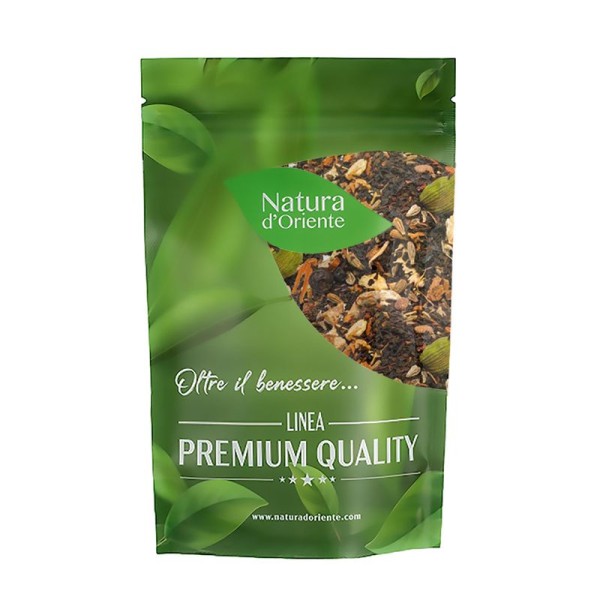
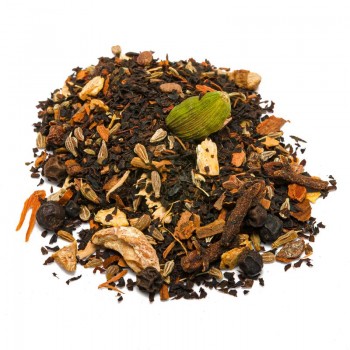
For all those who love spices, this is your tea: widespread in India, this black tea is a real explosion of fragrances thanks to cardamom, pepper, cloves and cinnamon which make it an excellent drink all year round. Excellent if drunk with the addition of milk, as in its original preparation, but pleasant even if drunk pure.
The Indian tradition requires that it be boiled, boiling the boil 3 times, in water and milk (2 cups of water + 1 cup of milk) with the addition of brown sugar.
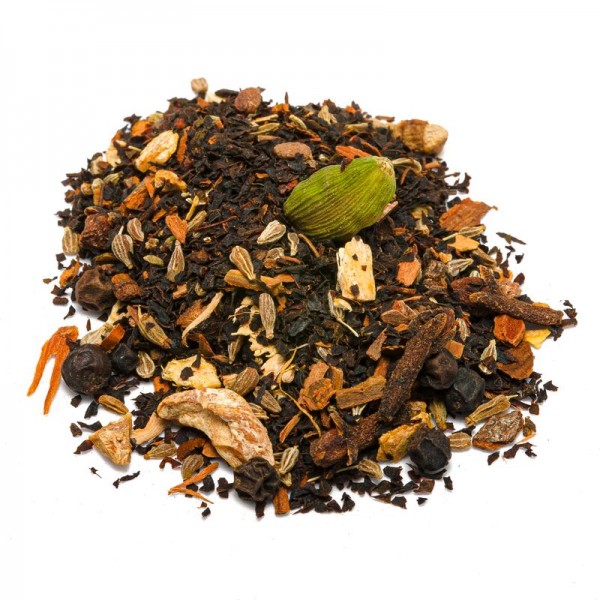
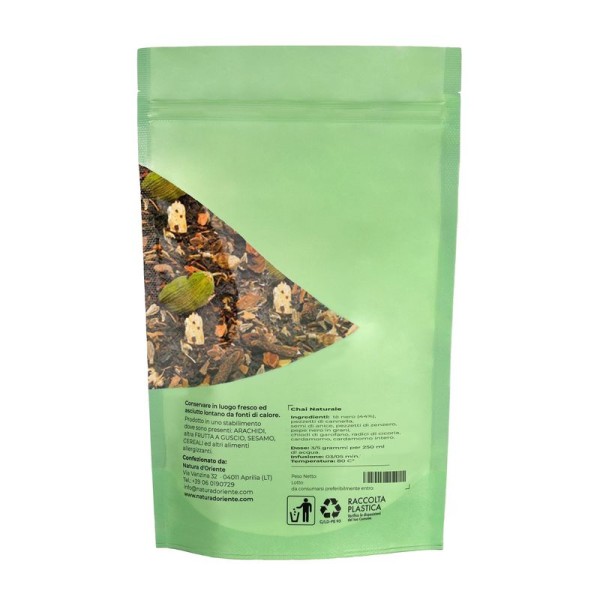
black tea (44%), cinnamon bits, aniseed, ginger bits, black peppercorns, cloves, chicory roots, cardamom, whole cardamom.
For lovers of Indian tea, natural Chai offers a more intense flavor thanks to the spices. It releases a richness of aromas, with an aromatic profile that makes black tea even more relaxing and satisfying for the senses.
By blending the blend with milk, following the Indian tradition, the tea acquires greater depth, releasing even more aromas and flavors. Natural chai is perfect year-round: an energizing black tea in the summer and a delicious, invigorating hot drink in the colder months.
The ingredients of Masala Chai are primarily spices, which originally varied from recipe to recipe—every Indian family has its own blend. Our proposal follows tradition, incorporating the most common aromatic spices into natural chai, already perfectly balanced for infusion (with or without milk).
Black tea: Indian loose-leaf tea is used in chai as a full-bodied and robust base, especially when brewed with water. It balances the sweetness of the spices, creating complex aromas.
Cinnamon: Its sweet, woody flavor adds intense warmth to chai, slightly pungent; its enveloping aromatic notes complement the cloves.
Anise seeds: Add a sweet, vegetal, and slightly spicy flavor that teases the palate and pairs well with tea. The intense, balsamic aroma pairs well with ginger.
Ginger: provides the perfect balance between spiciness and sweetness, a warm embrace with fresh notes reminiscent of citrus, pairing well with black pepper. Black pepper: Widely used in India, this ingredient adds a deep, warm, pungent note that is immediately and intensely revealed on the nose.
Cloves: give chai tea a warm, intense flavor, with enveloping, sweet, balsamic, and slightly spicy notes that enhance the cinnamon and pepper. Chicory roots: provide an earthy, bitter aftertaste, similar to coffee, which becomes an original and beneficial touch in natural chai.
Cardamom: One of the most prized spices, it gives tea a warm, slightly pungent, and fruity flavor; The energetic aroma with balsamic nuances is reminiscent of ginger – both come from the same plant family (Zingiberaceae).
This unique spice combination is not so common in supermarkets and grocery stores. You can find it in specialty tea and spice shops, such as our online shop Naturadoriente.com. If you're looking for a superior-quality masala chai, we've selected valuable ingredients for our loose blend. You can purchase natural chai tea in packs ranging in weight from 25g, 50g, 100g, or 300g.
It can be enjoyed like regular tea by steeping it in hot water for a spicy and aromatic infusion. Alternatively, it can be prepared following the Indian chai tradition, combining tea, water, and milk and bringing everything to a boil. As it simmers with spices and milk, the black tea takes on a richer, creamier, and more complex flavor.
For a simple infusion, we recommend boiling the water and, when it reaches 90-95°C, adding the natural chai blend. We recommend 3-5 g of blend per cup (about 250 ml). Steep for 3 to 5 minutes, depending on your preferred strength.
To follow the Indian method, pour 2 cups of water and the natural chai blend into a saucepan, proportionately. Heat over medium heat on the stove, stirring constantly.
Bring to a boil and then immediately reduce the heat to low: simmer for about 3-4 minutes, stirring, to allow the spices to infuse into the water. After 3 minutes, add 1 cup of milk. Raise the heat and bring to a boil a second time. Reduce the heat to low and simmer for about 4-5 minutes (depending on how much you like the milk to simmer). Turn off the heat and pour the hot chai into cups, filtering it through a sieve.
If desired, you can add brown sugar along with the sugar. You can also use plant-based milk, such as almond or cashew milk. To obtain a creamy chai tea, it's important to allow some of the liquid to evaporate, thickening it slightly.
How to serve chai? It can be served hot straight from the stove, with biscuits or lightly spiced desserts. To serve it cold, let it cool to room temperature and then top it off with ice cubes during the summer.
This blend also provides the beneficial properties of the spices and tea, in addition to its delicious flavor.ious. In chai, the spices have beneficial properties for digestion, thanks to the presence of ginger and cinnamon, for example, which promote regular intestinal transit. The spices in masala chai have been used for centuries in the Ayurvedic tradition to aid digestion, especially after meals to combat bloating. Furthermore, both the tea and various spices contain antioxidant compounds, which can help our body fight free radicals.
Another benefit of chai, associated with Indian black tea, is the energizing properties of theine. There are no particular contraindications for consuming masala chai, but it is recommended to avoid excessive doses due to the presence of caffeine (theine).
The concept originated with "masala chai," which literally means "spiced tea." Its origins appear to date back to the period of British colonization of India, between the 19th and 20th centuries, when itinerant tea vendors (chaiwallahs) became widespread. It was then that they began adding special blends of spices and milk to black tea (usually Assam), inspired by Ayurvedic practices. The basis for a slow-brewed drink was born. Over time, numerous variations have developed with different aromatic ingredients, and there are countless different spiced tea recipes in Indian tradition. Chai can be prepared with milk, water, or even both. While infusions of tea, milk, and spices are the most traditional, natural chai is also highly appreciated as a blend prepared without milk.
Specific References
For all those who love spices, this is your tea: widespread in India, this black tea is a real explosion of fragrances thanks to cardamom, pepper, cloves and cinnamon which make it an excellent drink all year round. Excellent if drunk with the addition of milk, as in its original preparation, but pleasant even if drunk pure.
The Indian tradition requires that it be boiled, boiling the boil 3 times, in water and milk (2 cups of water + 1 cup of milk) with the addition of brown sugar.
black tea (44%), cinnamon bits, aniseed, ginger bits, black peppercorns, cloves, chicory roots, cardamom, whole cardamom.
Turmeric chai is an exotic and healthy variant of traditional chai tea, enriched with the beneficial properties of turmeric. This spicy and aromatically rich drink is prepared with a blend of black or green tea, milk, spices such as cinnamon, cloves, black pepper and ginger, and a touch of turmeric. Turmeric gives the tea a vibrant golden color and adds a slightly earthy, spicy flavor.
black tea (36%), cinnamon bits, turmeric slices, ginger bits, aniseed, black pepper, cloves, cardamom, whole cardamom, chillies.
A greedy way of life for all lovers of Indian tea; enriched with small pieces of cocoa beans to make it even more delicious and unforgettable. The Indian tradition provides that it is boiled, by raising the boil 3 times, in water and milk (2 cups of water + 1 cup of milk) with the addition of brown sugar.
cocoa beans (54%), cinnamon pieces, fennel, ginger, orange peel, licorice, cardamom, orange pieces, pink pepper.
For all those who love spices, this is your tea: widespread in India, this black tea is a real explosion of fragrances thanks to cardamom, pepper, cloves and cinnamon which make it an excellent drink all year round. Excellent if drunk with the addition of milk, as in its original preparation, but pleasant even if drunk pure.
The Indian tradition requires that it be boiled, boiling the boil 3 times, in water and milk (2 cups of water + 1 cup of milk) with the addition of brown sugar.
Pu Erh black tea (43%), cinnamon sticks, ginger, green mate, anise, star anise, cardamom, pink pepper, guarana.