
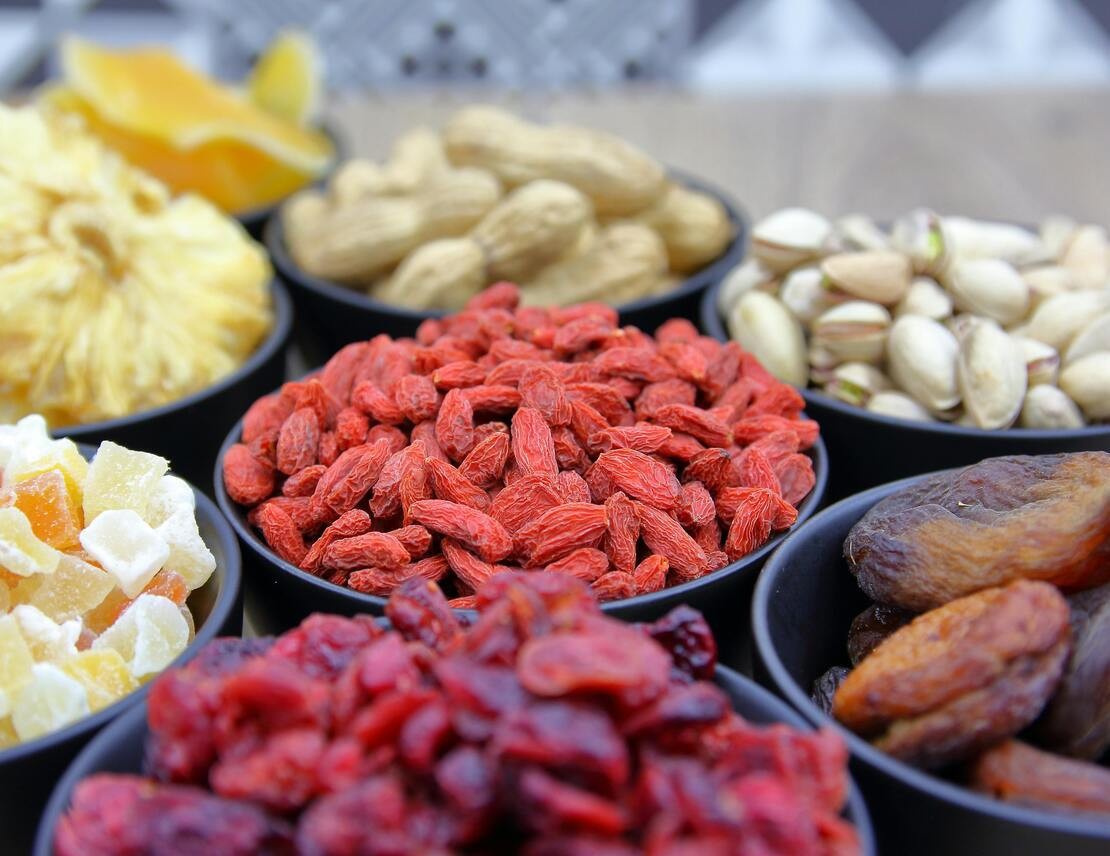
Dried and dehydrated fruit plays an important role in a healthy, varied diet, but we know that it can have certain contraindications in the presence of allergies or specific health issues. In the case of the FODMAP diet, for example, there is no absolute ban on consuming them, although during a particular phase of the protocol, they are among the foods to be limited… let’s try to clarify things a little.
What are FODMAPs and what does the diet involve?
Before proceeding, a necessary clarification is required: what we are discussing is a therapeutic diet, which must be undertaken with the guidance of a doctor or nutritionist and only in the presence of specific health issues. The FODMAP diet cannot be improvised and cannot be based on a DIY meal plan; it is not a diet aimed at weight loss, it is not a low-carb diet, and it must not be used as such. This specific protocol involves the (temporary) elimination of so-called FODMAPs (Fermentable Oligo-, Di-, and Mono-saccharides And Polyols), short-chain carbohydrates that can ferment rapidly in the gut, causing or exacerbating symptoms such as bloating and abdominal pain associated with IBS, followed by their gradual reintroduction. The entire process is usually divided into three phases. An initial phase (lasting between 3 and 6 weeks), which involves a drastic reduction in FODMAP foods.
This initial step is usually followed by a sort of ‘testing phase’ of varying duration, during which the excluded foods are gradually reintroduced into the diet, in small quantities, once or several times a week, to monitor how symptoms develop. The protocol concludes with a third phase involving an analysis of the results and the formulation of the most suitable dietary plan for the individual patient.
Dried and dehydrated fruit in the low-FODMAP diet
In the first phase of the FODMAP diet, dried and dehydrated fruit are among the foods that should be limited, but a distinction must be made between fruits that can be classified as high-FODMAP and those that can instead be classified as low-FODMAP.
High- and low-FODMAP dehydrated fruit
Almost all dried fruit is considered high FODMAP, as the dehydration process itself concentrates the nutrients within it; however, there are some dried fruits that are generally considered low FODMAP, specifically: banana chips, dried raisins, cranberries, currants and dates. Obviously, their consumption should be limited to significantly lower amounts than the daily recommended intake, with a preference for products containing no added sugars.
High and low FODMAP nuts
Like dried fruit, nuts are also classified as FODMAP foods, particularly pistachios and cashews, but during the elimination phase
Your doctor may allow you to eat small amounts of macadamia nuts, pecans, pine nuts and peanuts.
Oilseeds in the FODMAP diet
Most oilseeds are considered low FODMAP and are permitted in the first phase of the diet, provided that the maximum amounts recommended by your specialist are adhered to. We conclude by reminding you, as always, that this article cannot in any way replace the advice or guidance of a doctor, and this applies to the FODMAP diet, as it does to other diets, which require a medical and personalised approach tailored to the characteristics and needs of the individual.