
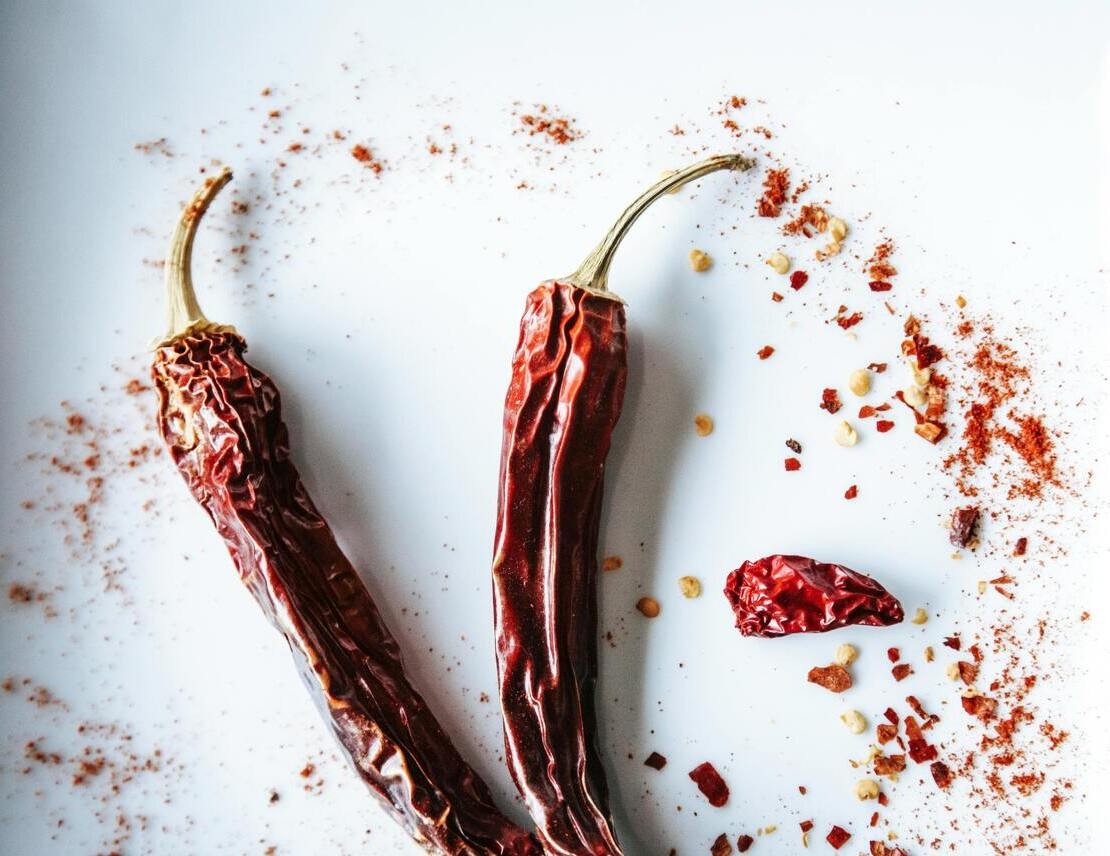
With 14th February fast approaching, we thought we'd dedicate today's post to herbs and spices traditionally associated with love, desire and fidelity, used in ancient recipes, remedies and rituals. You may already be familiar with some of them, but let's take a look together.
Aphrodisiac spices and herbs
In the past (and still today), many herbs and spices have been attributed with aphrodisiac properties, first and foremost chilli pepper, but the same properties, or at least similar effects, are also attributed to cinnamon, vanilla, cloves, ginger, nutmeg, cardamom, also mentioned in ‘The Thousand and One Nights’, and saffron, which, in addition to being considered an aphrodisiac, symbolises devotion, love and passion in various traditions.
We should also mention tonka beans, which are considered a kind of ‘lucky charm’ for those seeking love.
Alongside spices, we also find numerous herbs and roots: ginseng, maca, damiana, yarrow, savory, and the list goes on and on.
Other aromatic herbs or herbs used for infusions associated with the symbolism of love
Speaking of herbs and love, (even if it is not exactly an herb) we cannot fail to mention myrtle, a plant sacred to Aphrodite in ancient times, lavender, as well as rosemary, considered in ancient Greece to be a symbol of deep love and fidelity.And our list continues with verbena, bay leaf, oregano and honeysuckle.
Keep an eye on our blog if you want to discover more interesting facts about spices and aromatic herbs.