



Notice to customers: due to the high volume of orders and increased workload for couriers, deliveries may take a few days longer than usual. We apologise for any inconvenience.
Reference: 1905
 No reward points for this product.
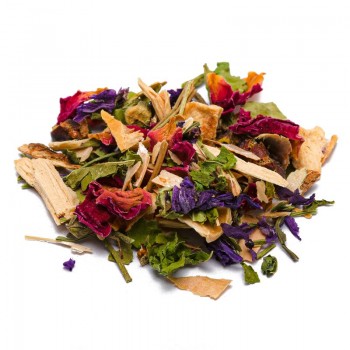
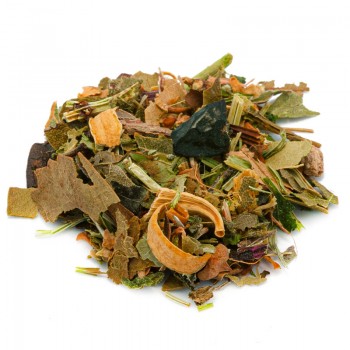
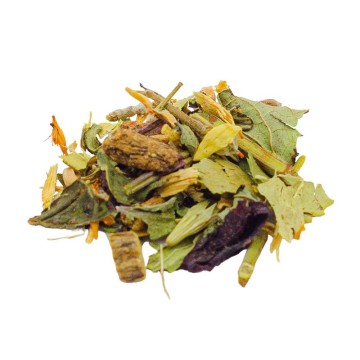
This combination is designed to naturally promote proper digestion, avoiding stomach swelling after meals. The blend provides various herbs, leaves and flowers against meteorism and intestinal gas formation. To be drunk after meals and in the evening, to aid digestion before falling asleep.
fennel, lime, licorice, elecampane, mint, lemon balm, orange leaves, hyssop, hibiscus, sassafras, lime flowers and bracts, condurango, rosemary, centaury, lavender.
This fennel-based herbal tea blend offers a complex taste experience. The fresh aromatic notes of mint and lemon balm are enriched with the slightly sweet and spicy nuances of fennel and licorice, and the herbaceous aftertaste of rosemary and hyssop lends a grassy and slightly resinous finish. Floral notes of lime blossom, a hint of bitterness from centaury and hibiscus are added.
The herbal tea's ingredients are selected from plants and flowers traditionally known to promote a feeling of lightness and well-being after meals and before bed. Perfect for a moment of natural relaxation.
Botanically, fennel is the plant Foeniculum vulgare, belonging to the Apiaceae (Umbelliferae) family. Native to the Mediterranean, it is now widespread as an edible vegetable. It produces yellow flowers, followed by green and then grayish fruits.
Melissa officinalis is a plant belonging to the Lamiaceae family. It is native to the eastern Mediterranean and western Asia. It is also called lemongrass for its lemony scent.
The orange tree is Citrus sinensis, belonging to the Rutaceae family. It originated in China as a hybrid between the pomelo and the mandarin. Over the centuries, countless varieties of orange have developed, with sweet oranges being the main distinguishing features from bitter oranges.
The hibiscus plant, Hibiscus sabdariffa, is part of the Malvaceae family. It grows in tropical and subtropical regions throughout the world. Its calyx and flowers are used to prepare hibiscus tea, called karkadè.
Licorice is obtained from the root of the Glycyrrhiza glabra plant, part of the Fabaceae family. It is native to Asia and southern Europe. Plant extracts of licorice root, obtained by boiling them, are used to flavor licorice desserts.
Hyssopus officinalis is a perennial plant of the Lamiaceae family. It has a thin, square stem with opposite leaves that can reach about 2 meters in height. It blooms from June to October, producing purple-blue flowers, occasionally white or pink in some varieties.
Lavender, or Lavandula, belongs to the Lamiaceae family and is native to the Mediterranean area. It is a genus that includes about 30 species, all small evergreen shrubs with gray-green leaves. The purple flowers, arranged in spikes, are famous and used in herbal medicine, cosmetics, and laundry.
The lime tree, or Tilia, is a tree belonging to the Malvaceae family. It is native to the Northern Hemisphere, but today grows in temperate regions of North America, Europe, and Asia. Of Tilia cordata, also known as small-leaved lime or American lime, herbal medicine uses primarily the flowers and leaves, or the bark for its astringent properties.
Sassafras, commonly known as Sassafras, has the botanical name Sassafras Albidum. It is an evergreen plant native to North America and belongs to the Lauraceae family. An essential oil containing safrole is extracted from the root, used in perfumery, as a food flavoring, and in pharmaceutical preparations.
Marsdenia cundurango is a woody liana of tropical origin, belonging to the Asclepiadaceae / Tylophoree family. It grows robustly to a height of about 10 meters and produces velvety leaves. The flowers are small and light brown.
The plant Inula helenium, also known as elecampane, is a perennial herb belonging to the Asteraceae family. It displays yellow flowers and grows mainly in uncultivated land, in woods, among ditches, and in grassy pastures.
Centaury erythraea, or lesser knapweed, is a plant belonging to the Gentianaceae family. A plant from the Compositae or Asteraceae family is also often called lesser knapweed. The entire dried plant, both whole and in bloom, is used in phytotherapy.
The rosemary plant is Salvia rosmarinus, a shrub in the Lamiaceae family. It is known for its culinary use as an aromatic herb. It blooms from autumn to spring, producing linear leaves that are green on top and whitish underneath.
The infusion is made by placing about 3-5 grams of the mixture in a cup (250 ml) of water at a temperature of about 100°C.
Let the herbal tea steep for 8 to 10 minutes before drinking. Add honey or sugar, if desired.
Among herbal teas for digestive well-being, this blend has no known contraindications for moderate use, except for individual hypersensitivity to one or more ingredients. It is advisable to follow the recommended doses to avoid excessive consumption, which can lead to unwanted gastrointestinal effects. In case of sensitivityà at the gastrointestinal level or in the presence of particular conditions, a medical opinion is recommended before use.
This combination is designed to naturally promote proper digestion, avoiding stomach swelling after meals. The blend provides various herbs, leaves and flowers against meteorism and intestinal gas formation. To be drunk after meals and in the evening, to aid digestion before falling asleep.
fennel, lime, licorice, elecampane, mint, lemon balm, orange leaves, hyssop, hibiscus, sassafras, lime flowers and bracts, condurango, rosemary, centaury, lavender.
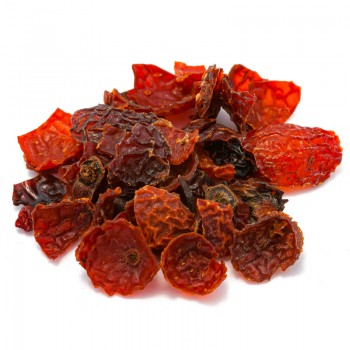
Rose hips are red berries of Rosa Canina, harvested and used in a wide variety of preparations. Among the best sources of vitamin C, rose hips contain high levels: a resource exploited through the peels, dried and ready for infusion. The peels can be mixed with other herbs or flowers, to give a tart and healthy touch.
cinorrodo
Roman Chamomile is a variety that has beneficial properties in case of digestive disorders, stomach pain, diarrhea, flatulence, swelling and irritation of the intestinal tract. The flowers for herbal tea can relieve cramps and menstrual pain, and are useful for soothing pains from neuralgia, migraines and toothaches.
The Roman chamomile flower tea is a remedy to counteract insomnia, nervous tension and stress. The soothing properties of chamomile are also used for lotions suitable for conjunctivitis and skin redness. Strengthens and lightens the hair, applied as an infusion after shampooing.
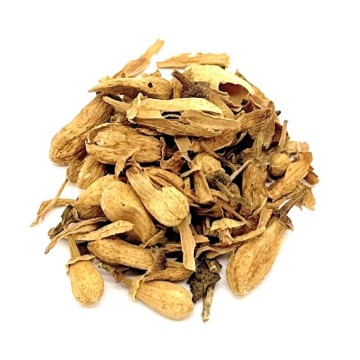
Ingredients: Roman chamomile
Botanical name: Anthemis nobilis L./ Chamaemelum Nobile A
Origin: France
Compound Parsley is a natural blend that combines parsley, known since ancient times for its multiple uses, with other selected herbs. Ideal for those who want an infusion with a fresh and slightly aromatic taste, this composition expresses the authenticity of wild plants. The careful processing and respect for the natural characteristics of the herbs guarantee a high-quality herbal tea, perfect for those looking for a simple and natural moment of well-being.
parsley rad, beans, horsetail, rose, elderberry wood, bistort, juniper, mallow leaves, mallow flowers
Orange blossoms can be used alone for a calming herbal tea, or added together with a blend of medicinal herbs, as desired. They possess expectorant properties against colds, thanks to vitamin C, and promote proper digestion. The relaxing characteristics of orange blossom are useful in cases of insomnia, anxiety and stress.
Ingredients: orange blossom
Botanical name: Citrus aurantium
Origin: Middle East
The Linden Composto is born from a careful selection of herbs traditionally appreciated to prepare infusions with a sweet and enveloping flavor. The linden, known for its fragrant flowers, is the heart of this blend, enriched by other medicinal plants that enhance its natural aroma. Ideal to accompany moments of relaxation, this herbal tea brings with it all the delicacy and purity of nature, in a warm and pleasant embrace.
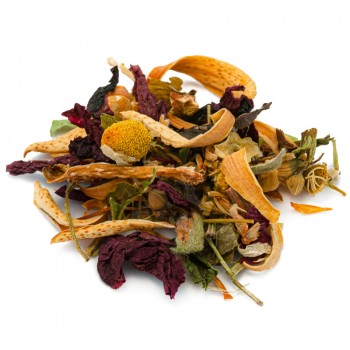
linden, lemon balm, chamomile, orange, poppy, woodruff, hawthorn, hops, verbena, centella.
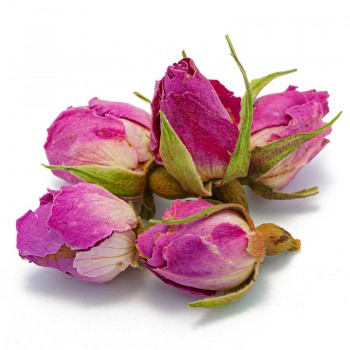
An infusion with rosebuds helps the body and the immune system, to relieve bronchitis and pharyngitis. They perform a soothing function on the oropharyngeal mucosa, voice drop and respiratory system.
Ingredients: rosebuds
Botanical name: Rosa Gallica L.
This blend brings together selected herbs traditionally used in infusions related to well-being after meals. Ingredients such as artichoke, dandelion, mint and helichrysum are known in the herbal tradition for their use in aromatic and light herbal teas. A fragrant and pleasant to taste blend, designed for a daily moment of balance and harmony.
artichoke, elderberry flowers, raponth, agrimony, rosemary, licorice, orange peel, dandelion leaves, mint, fumitory, woodruff, hibiscus, helichrysum.
Uva Ursi Composta is a blend of natural herbs centered on the bearberry, a plant traditionally appreciated for its robust character and its properties. Combined with other selected medicinal plants, this herbal tea offers an intense and slightly bitter flavor, perfect for those looking for authentic and decisive flavors. The quality of the raw materials and the attention to processing guarantee a genuine product, inspired by the most ancient tradition of herbal infusions.
bearberry, birch, horsetail, nettle, restharrow, goldenrod, mint, dog rose, blueberry, herniaria, linden flowers and bracts, hedge mustard.
Compound senna is made specifically for those who have problems with constipation, promoting the purification of the body. These medicinal plants are notoriously known for their laxative properties. Senna leaves, elderberry and other herbs in the purgative herbal tea are all intended to solve the problem of constipation and regulate the intestine.
senna leaves, licorice, fallax, mint, elderberry, wheatgrass, vilucchio, parietaria, cuscuta, mentastro, anise, sweet orange, helichrysum stoechas.
Damiana Composta is a selection of medicinal herbs designed to offer an infusion with an intense and aromatic taste, ideal to sip at any time of the day. The blend combines plants traditionally used for the preparation of natural herbal teas, inspired by the European and South American herbal tradition.
damiana, lemon balm, muira puama, savory nut, helichrysum, verbena, parsley , hyssop.
A natural blend based on eyebright, enriched with selected medicinal herbs, traditionally used for infusions with a delicate and aromatic taste. The fusion of complex vegetal, floral and sweet notes creates a harmony of flavors that leaves a sensation of freshness. Ideal for a warm break of natural well-being during the cold season.
Euphrasia, ginkgo biloba, licorice root, peppermint leaves, nettle leaves, plantain.
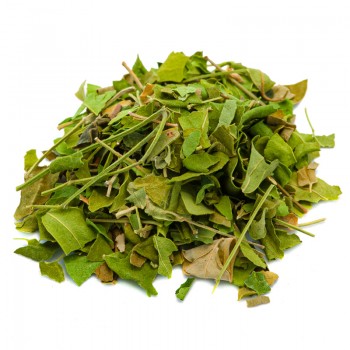
It has an important diuretic, draining and purifying action on the body and is an excellent anti-inflammatory and anti-rheumatic. Much appreciated by women who want to eliminate toxins and cellulite.
Ingredients: moringa
Botanical name: moringa oleifera Lam
Origin: India
The Joint Wellness Herbal Blendis made up of a mix of medicinal plants composed and selected on the basis of their natural anti-inflammatory properties. Herbs show adequate qualities to counteract the complications of arthritis and fight rheumatism; such as spirea, ash and birch.
spirea, ash, licorice, fir, myrtle, yarrow, bearberry, elderberry, chamomile, birch, thyme, linden, mint.
Discover the aroma and taste of this mix of herbs, selected for their energizing properties. A mixture prepared to give an intense energy boost, revitalize the body and the attention of the mind. Ideal in moments of psycho-physical tiredness or the need for high performance, it is a herbal tea with a powerful effect.
nettle, spearmint, rosehip, licorice, goji berries, mallow, marigold, guarana.
Salicaria Composta is a natural blend that enhances salicaria, a plant with ancient origins and appreciated for its delicacy. Together with other selected herbs, it offers an infusion with a soft and pleasantly herbaceous flavor. Perfect for those who love light and authentic herbal teas, this composition is born from a careful selection of medicinal plants and a processing that respects their natural properties, to guarantee quality and authenticity in every cup.
salicaria, cinchona, angelica, fennel, chicory, parietaria, dandelion leaves, rosemary, juniper, elecampane, licorice, chamomile, alchemilla, hops.
A blend of herbs for a herbal tea with a fresh, herbaceous flavor profile, a natural sweetness with light yet enveloping aromatic notes. Bursa Pastoris and Artemisia are among the most popular ingredients for pleasant and relaxing herbal teas, traditionally known to support relaxation and female well-being.
Bursa Pastoris, yarrow, oregano, parsley, artemisia, carrot, cumin.