
Reference: 1041
 No reward points for this product.
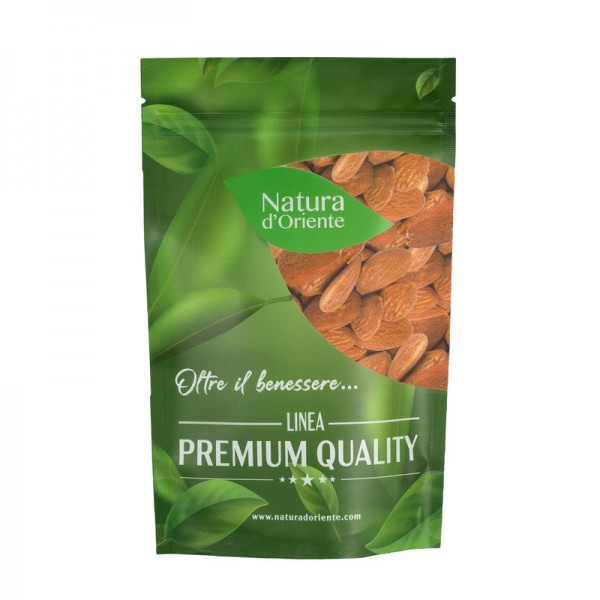
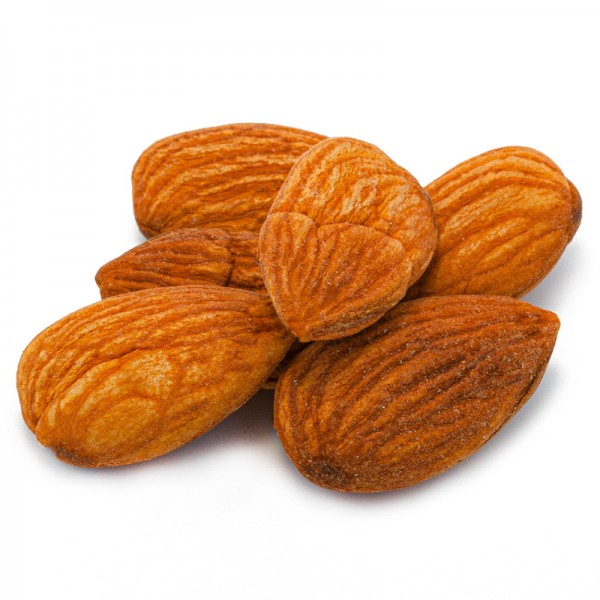
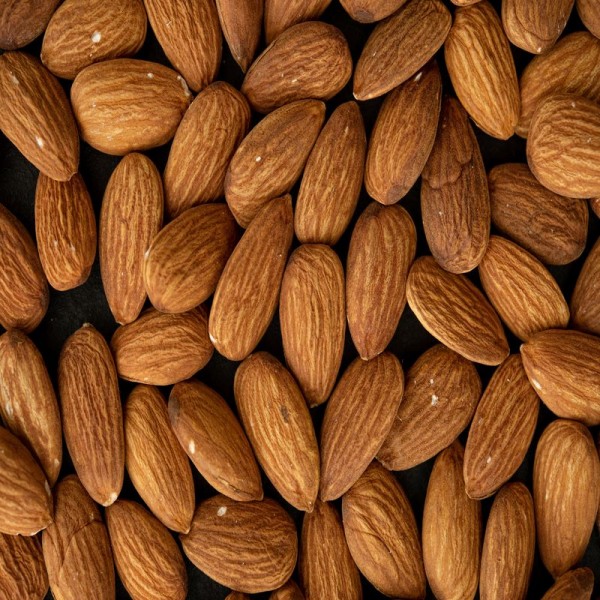
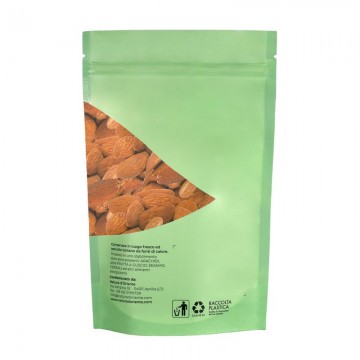
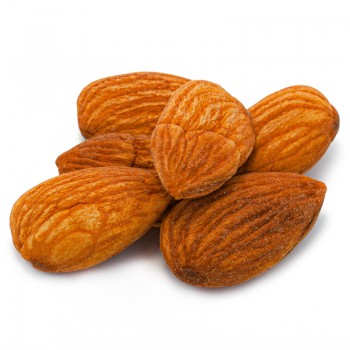
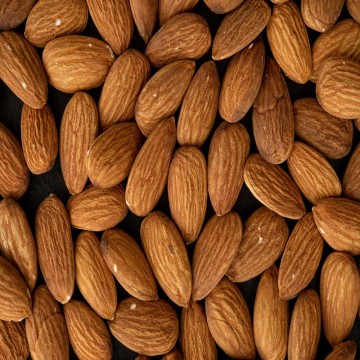
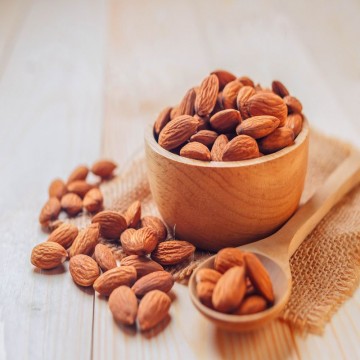
Ripened in the California sun, almonds from the USA have a less decisive taste than Sicilian almonds, but still pleasant. Already shelled, practical to enjoy as a tasty snack, excellent in the kitchen or as a praline.
ALMONDS
Almonds originate from Iran but today the United States of America (in reality we should say California, the production all comes from there) is by far the world's leading producer. This highly prized dried fruit is used in the cuisine of many countries around the world, almost always in the preparation of desserts.
If we refer to tradition over the centuries, almonds have been attributed beneficial properties in every field, including the inevitable aphrodisiac effects. But we prefer to focus on those that have been confirmed by scientific studies or that at least seem plausible given the nutrients contained in almonds. So let's see them, the most surprising is that almonds can be diet friendly, it seems strange for a food which like all dried fruit is full of calories (579 kilocals per 100 grams) but studies have been conducted which have revealed that part of these calories (10-15%) is not absorbed due to the poor digestibility of some nutrients. Furthermore, almonds give a sense of satiety which can be used to control hunger in those on a diet, provided that obviously you stick to the recommended dose of 30 grams per day and take their caloric intake into account.
Then almonds are full of antioxidants, both in the form of good fatty acids and vitamin E. Therefore they lower bad cholesterol (LDL), furthermore thanks to the presence of polyphenols (these, however, are mainly contained in the peel) they do not limit themselves to lowering it but counteract its oxidation which is a crucial step in the process that favors heart disease. The high magnesium content (100 grams of almonds provide 75% of the average daily requirement) could help lower blood pressure.
Finally, the fact that like all dried fruit, almonds are rich in fat but low in carbohydrates can help those at risk of diabetes to ensure an adequate caloric intake not deriving from sugars.
The almond tree (scientific name Prunus amygdalus) belongs to the same genus and subgenus (prunus subgenus prunus amygdalus) to which peaches belong, after all we can all notice how similar the stone of peaches and apricots is to almonds, the difference lies in the fruit, that of the almond tree is leathery and not fleshy and juicy. The plant is a deciduous tree (i.e. which loses its leaves in autumn and whose fruits fall when ripe) which normally grows between 4 and 10 metres. Pollination depends entirely on insects, in the USA every year more than half of the entire bee population raised by beekeepers across the country is rented and trucked to California for pollination.
Almonds originate from Iran and neighboring countries (Azerbaijan and Armenia), already in ancient times they spread throughout the Mediterranean basin (Southern Europe and North Africa) and more recently in other areas of the world.
Almonds were introduced into California by the Franciscan friars as early as the 18th century but it took more than a hundred years for cultivation to take hold successfully because the Spanish found themselves dealing with a (relatively) cooler and decidedly more humid climate than the one they knew. But already at the beginning of the 20th century the almond growing industry in California was fully developed and new varieties had been created through cross-breeding. Over the last 30 years, production has increased by as much as 400%, leading the United States to ensure well over 50% of world production and, given the growing demand from the market, to export to countries which are themselves historic producers of almonds such as Italy itself.
Currently, 13 commercially important varieties of almonds are grown in California, but the really important ones are: Carmel, Padre, Butte, Fritz. Monterey, Independence, but above all Nonpareil which constitutes 40% of total production. Consider that almond cultivation in California extends over an immense area between San Joaquin, Fresno and the Sacramento valley which amounts to more than half a million acres, i.e. more than 2023 square kilometres, which is just under the size of the entire province of Benevento.
Almonds, in addition to being consumed as asnack, are widely used in the kitchenand in the food industry, especially in the production of sweets, practically worldwide.
In our country, as is well known, they are used in some of the most iconic holiday desserts: the Easter dove and in nougat (as an alternative to hazelnuts), while small amounts of the bitter variety are used in amaretti biscuits. In Germany, almonds are part of the recipe for an Osterbrot (Easter bread), which is eaten for breakfast on holidays.
Nougat is also produced in Spain, particularly in the Alicante area, where the famous Turron de Jijona, a mixture of honey and ground almonds, is made.
In France, a dessert called Dacquoise is made of layers of almond and hazelnut meringue and whipped cream or buttercream on a butter biscuit base.
But among the recipes online, there's no shortage of recipes that use almonds in savory dishes, especially in exotic dishes or those inspired by Asian cuisine. We've chosen:
Tempeh with Basmati Rice and Almonds
(Tempeh is a traditional Javanese dish made from fermented soybeans)
Ingredients for 4 people
Preparation
1) Put a pot of water on the stove (to cook the rice).
2) Cut the tempeh into pieces.
3) Chop the onion and sauté it in two tablespoons of oil in a pan.
4) When it is soft, add the tempeh, 1 tablespoon of soy sauce, and sauté over high heat, stirring gently for about 5 minutes.
5) Add the almonds and continue cooking.
6) Drain the rice when very al dente and Sauté it in the pan, adding the remaining soy sauce.
7) Serve piping hot with fresh thyme.
Recipe source: Melarossa
Data sheet
Specific References
Ripened in the California sun, almonds from the USA have a less decisive taste than Sicilian almonds, but still pleasant. Already shelled, practical to enjoy as a tasty snack, excellent in the kitchen or as a praline.
ALMONDS
Hazelnuts have a good percentage of "good fats", mineral salts and vitamins, and are an excellent source of energy for our body. There are several benefits for the human body, which hazelnuts bring as well as many other types of dried fruit and there are several foods with numerous beneficial properties, rich in nutrients and vitamins.
HAZELNUTS

Much more than a tasty snack or to munch on with an aperitif, pistachios are a food that is a friend of our hearts. Nutritious, rich in vitamin B6 and unsaturated fats.
PISTACHIOS
Pumpkin seeds are known for their vermifuge properties. Snack and ingredient for tasty and healthy dishes. Rich in minerals, they are precious allies, because they can give us a great nutritional intake. Excellent as a mid-morning snack or in the afternoon in their natural version.
pumpkin seeds
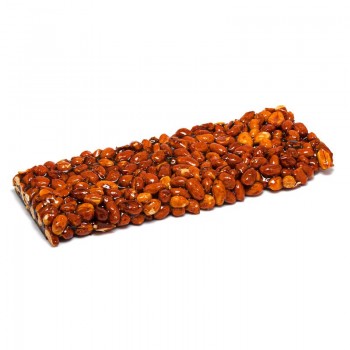
The Artisan Peanut Crunch is a traditional dessert made with genuine ingredients: toasted peanuts and golden caramel, without preservatives or artificial flavors. Prepared according to artisan methods, it offers a crunchy texture and a rich taste, perfect for those looking for a healthy and delicious snack. Excellent to enjoy at any time of the day, it is also an original gift idea for the holidays or special occasions. Carefully packaged to preserve its freshness, it combines quality and tradition in every bite.
sugar, PEANUTS.
Brazil nuts are oilseeds rich in benefits, rich in selenium and vitamin E. Also called Amazonian nuts, they are a type of dried fruit very useful for fighting free radicals , as well as being tasty and very versatile in the kitchen, excellent in particular with chocolate.
Ingredients: Brazilian nuts
Origin: Bolivia
Allergens : nuts
Packaging: kraft envelope with zip closure to save freshness.
Peeled almonds are a natural food known for its beneficial qualities. Like all dried fruit, they are quite a calorie food. Also good is the concentration of mineral salts such as magnesium, calcium, copper and phosphorus. Like all nuts, they are also foods rich in fiber that promote good bowel function.
ALMONDS
Pecans in shell are delicious fruits and are a food with exceptional nutritional properties of all. It is an alternative to our traditional nuts, such as walnuts, almonds and hazelnuts. It is also a food rich in vitamins, in particular Vitamin E, A, B and C. A complete food therefore, to make a snack or snack.
Ingredients: pecan nuts
Origin: Use
Allergens : nuts
Siberian pine nuts, also known as seeds or cedar nuts, excellent in various dishes, in a grandmother's tart or in the preparation of Genoese pesto.
✅ Ingredients: PINE NUTS
✅ Origin: Russia
Allergens: May contain traces of PEANUTS and other NUTS.
Roasted cashews are not just simple snacks, but they are fruits that contain countless beneficial privileges if taken regularly. It is a good source of minerals for the content of iron, phosphorus and in addition it provides vitamins B1 and A. Widely used in Indian cuisine.
CASHEWS, salt, sunflower oil.
Nuts have many beneficial properties. Nuts are also consumed as an afternoon snack, due to their ability to bring energy and support to the body.
Ingredients: Nuts
Origin: Chile
Allergens : nuts
Packaging: kraft envelope with zip closure saves freshness.
Pine nuts, rich in minerals and vitamins, are useful for stress and increase the body's defenses. Pine nuts are important for our health and, unexpectedly, they are excellent allies in diets. They give energy, without increasing the sense of hunger. A daily consumption of pine nuts helps to promote good intestinal regularity.
Ingredients: pine nuts
Origin: Italy
Allergens : nuts
Peeled almonds are a natural food known for their beneficial qualities. Like all dried fruit, they are a rather caloric food. They also have a good concentration of mineral salts such as magnesium, calcium, copper and phosphorus. In this toasted and salted version, they become a truly pleasant snack, for aperitifs or for a tasty snack.
ALMONDS, salt.
Antioxidant and anti-inflammatory mulberries are rich in nutrients that provide antibacterial, digestive, laxative, diuretic and vasoprotective properties. Mulberries are low in calories, contain good amounts of iron but also potassium, manganese, phosphorus and magnesium.
mulberry
Almonds are recommended at the end of a meal, as a snack, at breakfast, or to enrich a dish. Dried fruit is good for health and there are no more doubts about this. They can be an excellent anti-cholesterol "scavenger". The effect on blood sugar and the sense of satiety is also excellent. They also have strong anti-inflammatory properties and are also rich in antioxidant substances.
almonds.
Sunflower seeds are extremely rich in nutrients. They can be a valid support to integrate B vitamins and vitamin E into our diet, and can be a healthy snack for both adults and children.
sunflower seeds
An energetic mix of dried and dehydrated fruit with no added sugar, preservatives or colourings. A snack always at hand for those who want to stay in shape and have a healthy diet.
Raw WALNUTS, ALMONDS, HAZELNUTS, PISTACHIOS, CASHEWS, goji berries, black cherries, peaches, sultanas, apples, apple juice, coconut.