- New
NOTICE: POSSIBLE DELAYS IN SHIPMENTS
We would like to inform our valued customers that, due to the protests in Southern Italy, there may be delays in deliveries to Sicily, Puglia, Basilicata, Calabria, Campania, Abruzzo, and Molise. We apologize for any inconvenience.
Reference: 2280
 No reward points for this product.
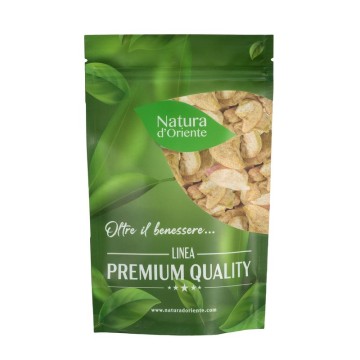
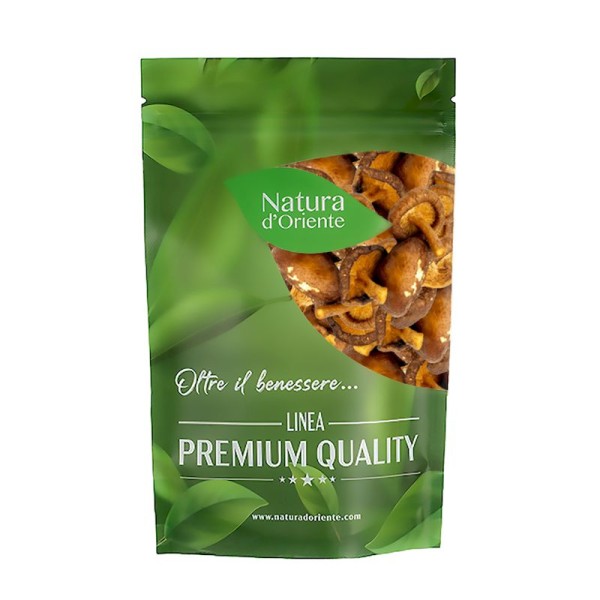
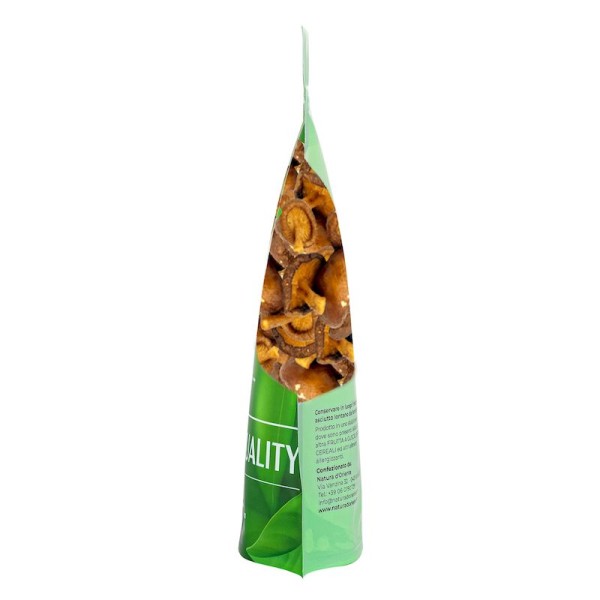
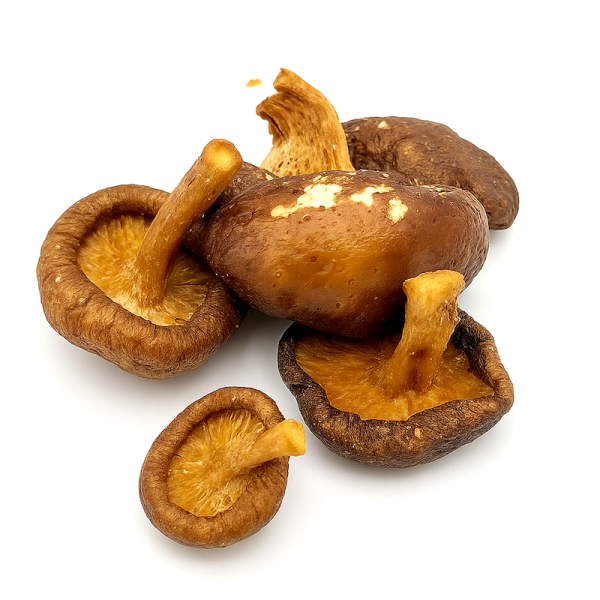
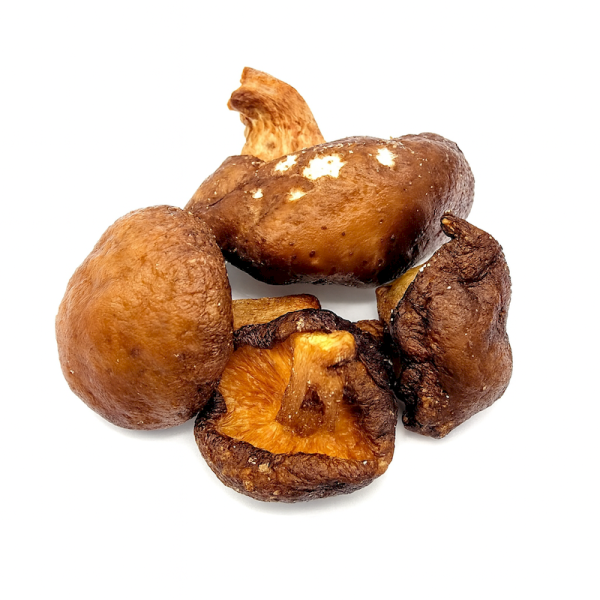
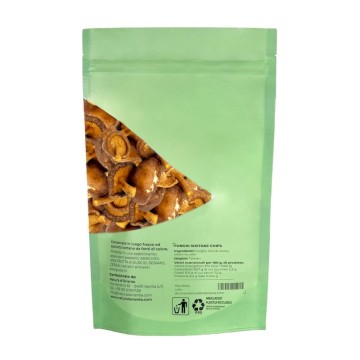
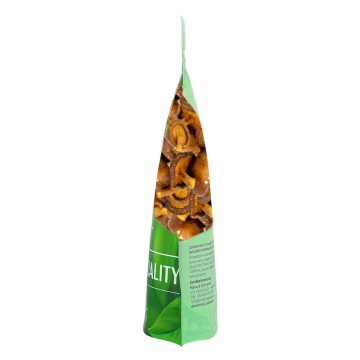
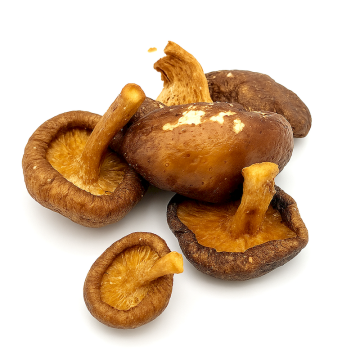
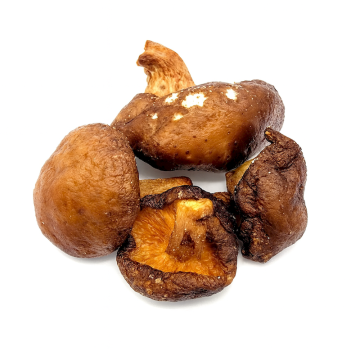
Shiitake mushroom chips are a tasty and innovative snack, made with these unique Asian mushrooms. They are carefully selected and then gently dried to preserve their aroma and natural properties. Crunchy and flavorful, they offer a full, authentic flavor reminiscent of Asian cuisine. Excellent as a snack to accompany appetizers or to add an original touch to gourmet dishes. A light and natural alternative to traditional potato chips.
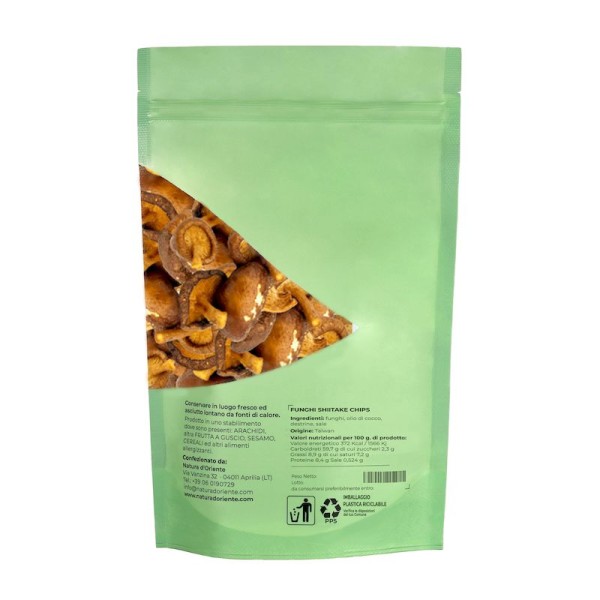
Mushrooms, coconut oil, dextrin, salt.
Among the most delicious and nutritious snacks are these special "chips" containing the beneficial shiitake mushroom. A ready-to-eat dried version, suitable for any time of day; as a hunger buster or as a versatile ingredient to add to Asian-inspired dishes. Shiitake is typical of Asian and Southeast Asian cuisine, and in this version it evokes local flavors. The mushrooms are treated with coconut oil, also an Asian tradition, in a process that preserves their flavor and concentrates their nutrients. The symphony of crunchiness, dry and firm, is enriched with a pinch of salt at the end.
This mushroom contains a unique combination of nutrients, so much so that in Japanese and Chinese culture it is considered a beneficial food, among the healthiest. Shiitakes contain vitamins A, B2, B12, C, and D. They also contain essential trace elements such as calcium, copper, iron, selenium, zinc, and manganese. The mushroom is also rich in dietary fiber and enzymes, considered beneficial for digestion. It contains proteins, including nine essential amino acids.
The nutritional properties of shiitake mushrooms support the body's natural defenses, stimulating the immune system. These satiating and naturally nutrient-rich chips are therefore a healthier alternative to traditional potato chips.
Thanks to their "chip" shape, they can be included in the diet as a crunchy snack to stave off hunger pangs between meals and provide beneficial nutrients. They can be added to more original appetizers or salads, where shiitake mushroom chips provide a more substantial, meaty, and light texture. In any case, they are a great resource as light and healthy snacks, easy on the digestion and offering a satisfying and authentic taste. Chips can be an original addition to dishes, adding their flavor to cheeses and vegetables. The umami flavor of shiitake mushrooms is rich, with earthy and slightly smoky notes, perfect for pairing with vegetables and legumes in vegetarian and vegan cuisine. They pair well with spicy sauces for a delicious snack. For an original touch, shiitake mushroom chips can be used to garnish risottos, grain-based dishes, cream soups, and savory pies.
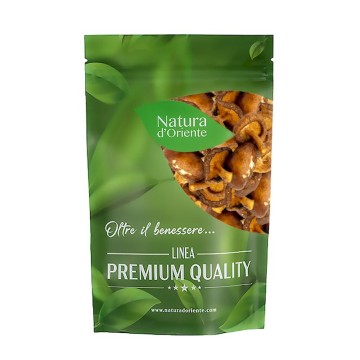
Where can you find shiitake mushrooms? Shiitake mushroom chips are not easily found in supermarkets or grocery stores. To enjoy this unique treat, you can choose shiitake mushrooms from our online shop, Natura d'Oriente. You'll find packaging that carefully reduces the shiitake mushrooms into chips, for maximum convenience and immediate consumption. They are available in packs weighing 100g, 250g, 500g, and 1400g for those looking to stock up on shiitakes.
The Lentinula Edodes macro-mushrooms are native to Asia and are now widely consumed worldwide due to their edibility. They originated in East Asia, especially in the forests of Japan, where they grow wild—not on the ground, but on the decaying wood of certain trees. For the mushrooms to thrive, they require hardwood (such as chestnut, oak, or maple) and specific temperature and humidity conditions. Their name derives from a particular tree on which they grow, the Japanese tsuburajii, with a fusion in the script between the symbol for tsubura jii (shii) and that for mushroom (take).
While they are mentioned in Japan as early as the 2nd century AD, they were described as present in China in the 3rd century and were appreciated over time as far away as Southeast Asia.
In addition to their spontaneous growth, with harvesting that took place from decaying trees, in Japan these mushrooms have also been cultivated for centuries following a particular method. When cut tsuburajii trunks were inserted into areas where shiitake mushrooms grew, the latter would also proliferate on the trunks. This gave rise to the cultivation of wild mushrooms in the forests, called yama shiitake.
Over time, cultivation was refined to meet the ever-increasing demand for mushrooms, with more intensive production systems. An older method, dating back to the late 18th century, was joined by another developed in the early 20th century from the studies of mycologist Shozaburo Minura. Production moved away from the forests, using mushrooms and logs on farms. However, it takes two years for them to begin growing, with two harvests per year, as the mushrooms must break down the hardwood of the logs to obtain the necessary nutrients. Other methods increase the number of annual harvests, using a mixture of sawdust and wood chips instead of logs.
Data sheet
Shiitake mushroom chips are a tasty and innovative snack, made with these unique Asian mushrooms. They are carefully selected and then gently dried to preserve their aroma and natural properties. Crunchy and flavorful, they offer a full, authentic flavor reminiscent of Asian cuisine. Excellent as a snack to accompany appetizers or to add an original touch to gourmet dishes. A light and natural alternative to traditional potato chips.
Mushrooms, coconut oil, dextrin, salt.
Known for millennia, lemon is a beneficial fruit from which we consume both the pulp and the juice of the fruit. It has an abundant content of vitamin C and a moderate antiseptic power, given to this citrus fruit by citric acid. The peel gives us an essential oil, useful as a decongestant for the respiratory tract, and to aid digestion. Many properties, conveniently available in the natural dehydrated lemon version, without added sugars, preservatives or dyes.
lemon, apple juice 8%.
Blackcurrant is a small fruit with an intense, slightly tart flavor. Rich in vitamin C and natural antioxidants, it is appreciated for its contribution to the well-being of the nose and throat, as well as its support for the body's natural defenses. Perfect as a healthy and tasty snack, it flavors salads and desserts, lending a pleasant fruity and aromatic note.
Blackcurrant, apple juice 5%
Dried pepper chips are a crunchy and colorful vegetable snack, ideal for those looking for a tasty and original alternative to traditional snacks. Made with yellow, red, and green peppers, these chips release all the authentic flavor of the vegetable, thanks to a manufacturing process that preserves its taste and properties.
Perfect as a hunger-busting snack, to enhance appetizers, starters, and creative dishes, pepper chips are appreciated for their high fiber content and balanced nutritional profile.
Yellow pepper, red pepper, green pepper, palm oil, dextrin, salt.
Notoriously rich in vitamin C, orange is also famous for its protective properties for the body. Sliced oranges, dried, are excellent to eat as snacks, or as ingredients for tasty sweet dishes. Among the specialties resulting from processing, such as jams, dehydrated oranges are often appreciated for the concentration of nutrients, as well as for their sweet taste.
orange (65.75%), cane sugar (33%), citric acid (1.5%). arancia (65,75%), E223 (0,05%).
Dried strawberries are one of the most delicious dried fruits, recommended for their beneficial properties and the fact that they do not contain added sugars. They maintain good quantities of vitamin C and potassium, and minerals contained in strawberries such as iron, calcium, phosphorus. In this version without colorants or preservatives, there is apple juice. You can enjoy them for breakfast in dried fruit or yogurt, or as a delicious hunger-busting snack at other times.
strawberry, apple juice 8%.
The dehydrated fruit salad represents a mixture of vitamins and taste, optimal for our body. Suitable for small snacks and snacks, also ideal for children, this mix of dried fruit is rich in every energetic property, given the variety of fruits that make up the fruit salad.
peaches, kiwis, pears, cherries, coconut, apples, melons, sugar, grapes, E220.
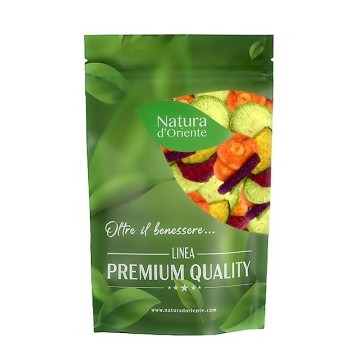
We are getting used to vegetable chips. The interest of these new vegetable snacks predominates more and more to try the particular flavor in contexts that meet the favor of Italians, responding to the growing demand for healthy but tasty alternatives.
green radish, carrots, sweet potato, sunflower oil, pumpkin, beetroot, purple sweet potato, taro, maltose, green beans, salt.
Blueberry is a beneficial fruit, which can provide numerous antioxidants for the well-being of the body, and to slow down aging by fighting free radicals. Taking blueberries regularly has long-term benefits in terms of energy, memory and body balance.
blueberries, sugar, sunflower oil.
The prunes of Agen have a high mineral content, which makes them suitable for the balance of the body and the regularity of intestinal transit. They help to keep the tissues toned, counteracting stretch marks and flaccidity, thanks to the properties of vitamin A, beta carotene and zinc.
plums, E200.
Peach is a summer fruit appreciated for its diuretic, moisturizing, refreshing and nourishing qualities. As a fruit, even in the dehydrated version, it retains nutrients that are very useful for the well-being and psycho-physical balance of the human being.
peaches, E220, sunflower oil.
The cinnamon crunchy dried apple is a dehydrated apple with no added sugar. It therefore maintains its numerous antioxidant and anti-aging substances, mineral salts and some vitamins that are beneficial for our health. Cinnamon, on the other hand, has a useful action to purify, counteract harmful intestinal bacteria, and gives an exquisite taste to the sour tone of these fruits.
The dehydrated apple with cinnamon is excellent as a snack to break hunger, in diets, or as an afternoon snack.
apple, cinnamon, dextrin, vegetable oil.
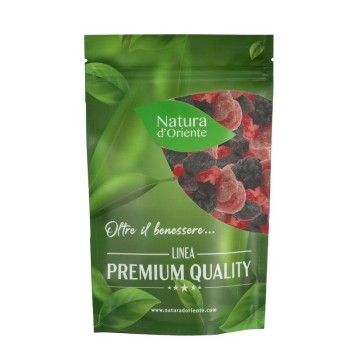
A real delicacy of fruit harvested in the summer but very useful for our daily needs. Berries with their active ingredients help reduce the risk of cardiovascular problems, increase energy, help mood because they promote the production of serotonin, contain antioxidants with an anti-aging effect.
Their delicious taste allows them to be eaten daily for breakfast in yogurt, during meals in salads and in the afternoon as a snack.
cherries, cranberries, sugar, black cherries, strawberries, E220.
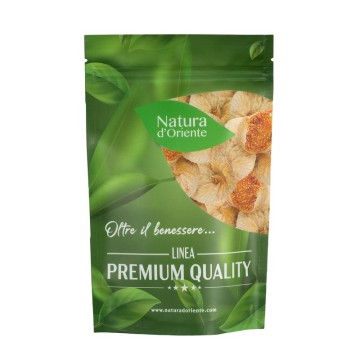
Dehydrated figs are a food with a high energy content, and the high amount of dietary fiber also makes them useful for maintaining normal intestinal functions. They are also rich in mineral salts, potassium, iron and magnesium, and in vitamins C and A, and among the dried fruit they stand out for their easy digestibility.
Figs, E220.
Ginger is rich in antioxidants, anti-inflammatory, antibacterial and antiviral agents. It is rich in vitamins A, B6, K useful for relieving the sense of nausea, migraine, indigestion, heartburn and stomach pain. Furthermore, being rich in vitamin B, it accelerates metabolism by decreasing the sense of hunger.
ginger, may contain traces of preservative E220 (Max 0.01%) fructose.
The dehydrated pear brings numerous benefits to our body. It is a fruit indicated in diets, for the fiber content, which has a notable satiating effect, but also for the presence of potassium. Pear is quite rich in sugars and fibers, while proteins and fats are present only in minimal part.
pears, E220, sunflower oil.
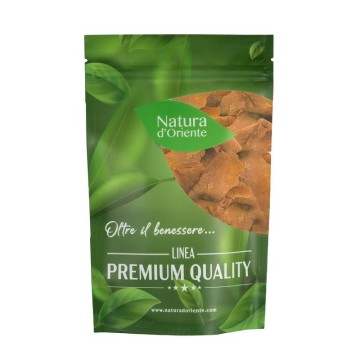
Ginger is known for use as a spice in cooking and also for the well-being of the body. It is a food rich in vitamins and antioxidants, used for centuries to relieve the sense of nausea, migraines, indigestion, colds and stomach pain. Also, being tasty it can decrease the sense of hunger as a snack in pieces, in this dehydrated version without sugar.
ginger, may contain traces of preservative E220 (Max 0.01%) fructose.