
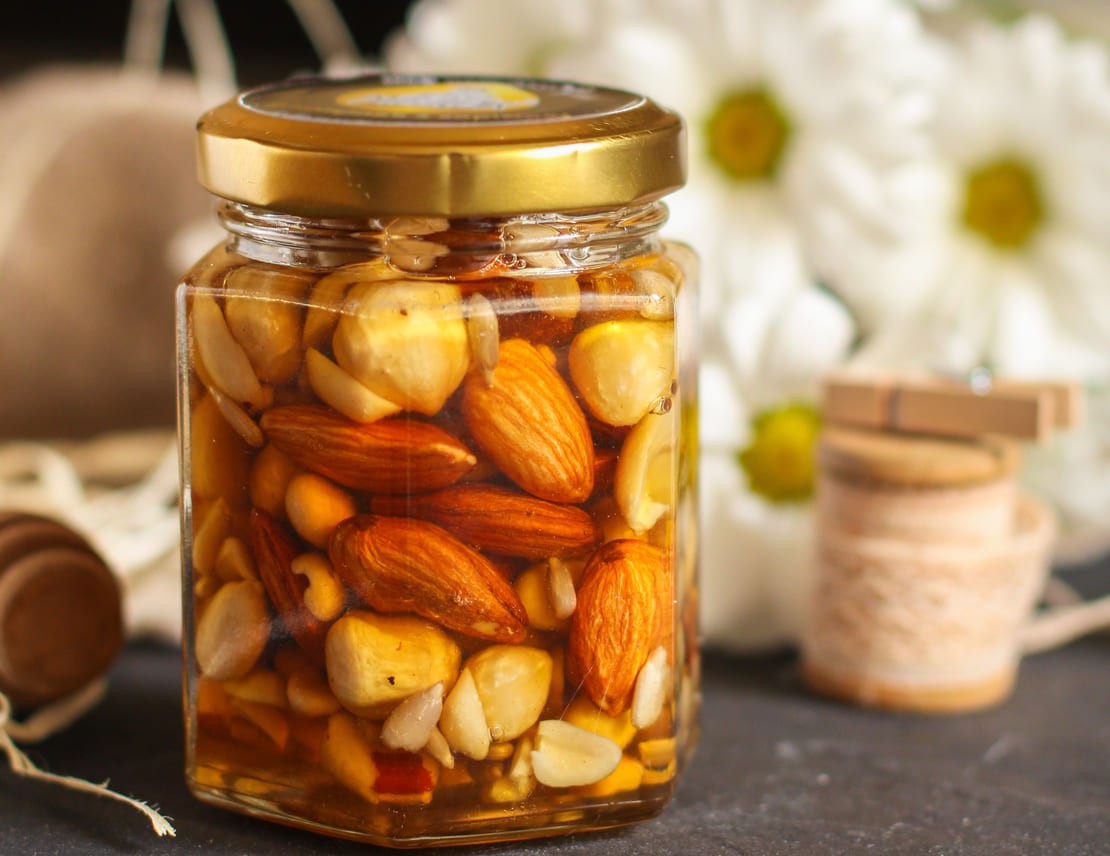
Drunken nuts: how to make them at home
Have you ever tried “drunken fruit”? It’s a dish made with fruit preserved in alcohol and flavored with spices. It’s a delicious treat that’s perfect after dinner or as a garnish for tarts and other baked desserts. It’s really easy to make, and there are countless variations of the recipe, depending on the type of fruit used and the alcohol chosen.
As mentioned, there isn’t just one recipe for making “drunken fruit”—there are as many versions as you’d like to experiment with. Let’s start with the base spirit: you can choose your favorite from rum, grappa, vodka, cognac, or brandy.
Drunken Dried Fruit: Which Ingredients to Choose
Drunken dried fruit in a jar can be made using soft dried fruit, nuts, or a mix of both.
The most popular combinations include dried figs, dried apricots, raisins, walnuts, almonds, and hazelnuts, but you’ll also get excellent results by experimenting with less common combinations, such as adding dried blueberries, mango, or dried papaya. Dried citrus zest is also widely used to add a sweet-and-sour note to the mixture.
The already intense flavor of our fruit can be further enhanced with a pinch of spices. As you might have guessed, the first on the list is cinnamon, which you can also pair with cloves or cardamom seeds (be careful not to overdo it, especially if you’ve chosen to use brandy or cognac as the alcoholic base).
Drunken Dried Fruit: The Preparation
Gather some glass jars (thoroughly sanitized) with airtight lids and sugar—preferably cane sugar—which you can add in the form of syrup, dissolved in a little lukewarm water.
In each jar, layer the dried fruit of your choice and the spices, add the sugar or syrup, and finish by covering the fruit with the alcohol. The fruit should not be visible.
Close the jar and shake gently.
The soaked dried fruit won’t be ready to eat for at least 10 days; this is the minimum resting period, although ideally it should be left to rest for 3 to 6 weeks to achieve the right degree of maceration.
It can be stored for at least a year, provided the jars have been properly sterilised before use and it is kept in a dry place, away from direct light and sources of heat.
As with any preserve, always pay close attention to any changes in taste, colour and smell.