
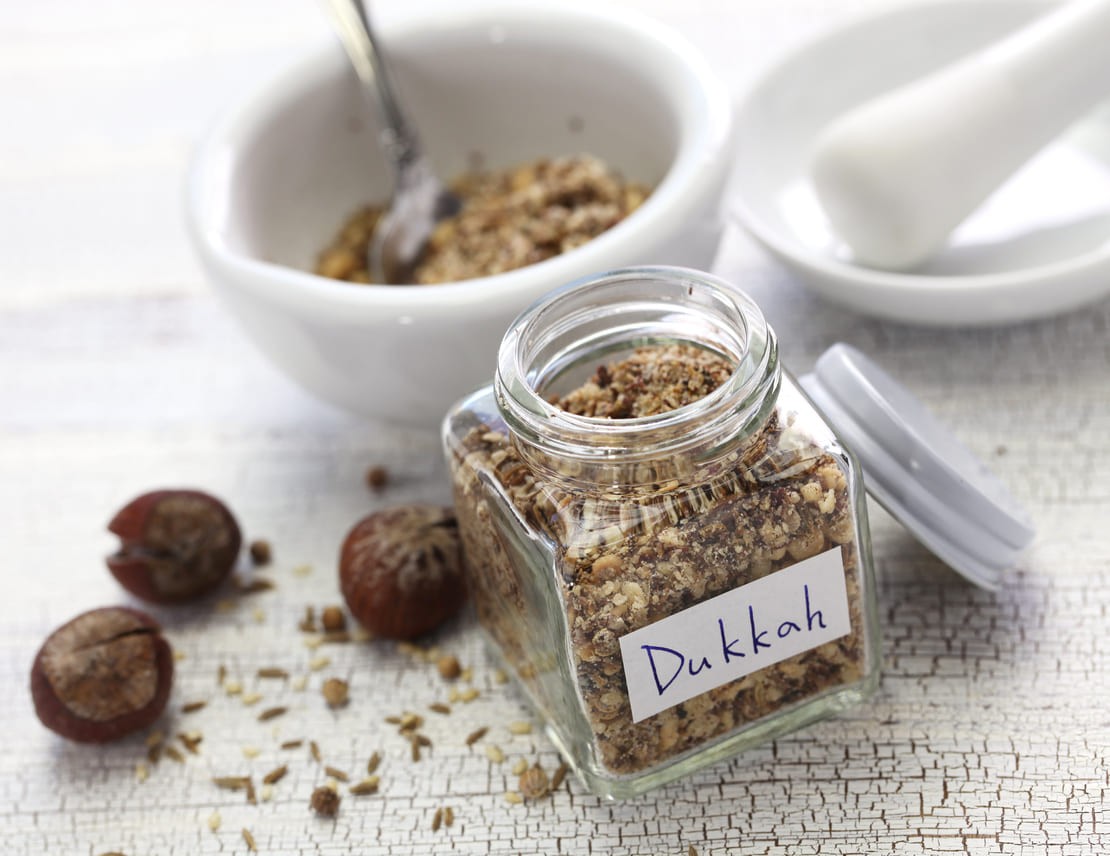
How to make homemade dukkah
Have you ever tried Egyptian dukkah? It’s a typical blend used in traditional cuisine, made with spices, nuts and seeds. Tasty and easy to make, it’s suitable for a variety of uses in the kitchen. Let’s take a look at how to make a homemade version. Is dukkah Egyptian or Greek? Although widely used in Greek cuisine, dukkah is a traditional Egyptian blend (also very common in Ethiopia). If you’ve asked yourself this question, you’ve most likely come across the recipe for the Greek ‘variant’, which adds Mediterranean spices and herbs to the original version.
Egyptian dukkah: the ingredients you’ll need
To make your own homemade dukkah, you’ll need hazelnuts, almonds and pistachios, sesame seeds, fennel seeds, salt (some recommend using flaked salt), cumin, coriander and cayenne pepper (or whole black peppercorns). If you have enough time, according to the traditional recipe, the mixture should be prepared using a pestle and mortar, but you can also process the ingredients in a food processor, taking care not to over-process them so as not to make the texture too fine. First of all, you’ll need to toast the hazelnuts, almonds (preferably blanched) and sesame seeds separately. To toast the nuts, you can use either a frying pan or the oven (in which case you should toast the almonds and hazelnuts at 180 degrees for a maximum of 3 minutes). Once the toasting is complete, and after allowing the ingredients to cool to room temperature, you can combine the seeds, nuts and spices in a food processor or mortar.
The spices we have listed are the essential ones called for in the traditional recipe, but you can add others if you prefer a more intense flavour.
Once prepared, dukkah does not need to rest; it can be used straight away, and you can store it in an airtight jar in a dry place, away from heat and direct light, for up to 4 weeks.
How to use dukkah in the kitchen
You can use your dukkah in countless ways; it’s also excellent on its own on bread with a drizzle of oil. You can use it to add extra flavour to a crispy breadcrumb coating, for roasted or crusted meat and fish. To add a savoury touch to hummus or other vegetable and pulses purées, you can use it as a spicy, flavourful topping for soups, on roasted vegetables, or to add a touch of creativity and flavour to a fresh salad.