
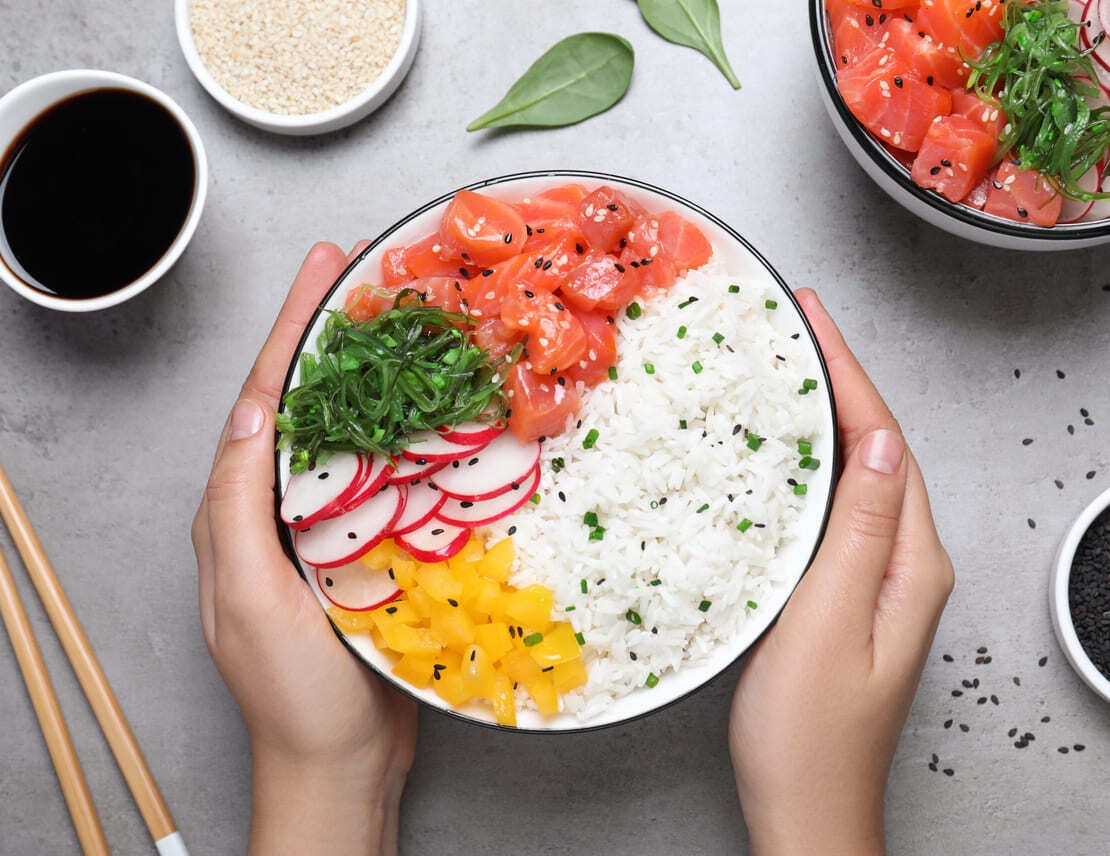
What type of rice to use for poke and how to prepare it
Tasty, nutritious yet light, poké is the perfect dish for a complete and healthy lunch, even during your lunch break in the summer. It’s even better when made at home! Let’s take a look at which type of rice is best suited and the steps to follow to make it.
Traditionally, when making poke, it is best to use a short-grain, round-grain rice – one of the varieties typically used for sushi, such as Uruchimai. As this isn’t always available in shops, you might try specialist shops, both high-street and online, that stock ethnic foods.
Alternatively, you can also use more readily available varieties with excellent results, such as Originario, Vialone Nano or Carnaroli, though there’s no reason why you shouldn’t try making it with a long-grain rice such as jasmine or basmati. The result will still be very tasty.
How to prepare the rice for poke
Some people ironically dismiss this dish… comparing it to our own rice salad, but we know full well that we’re talking about very different things, and the process for preparing poke is simple but certainly more involved.
It is essential to prepare the rice correctly; it must be thoroughly rinsed before cooking. According to Japanese custom (although we should remember that we’re talking about a Hawaiian dish), the rice should be rinsed several times until the water runs clear.
Once the rinsing stage is complete, we can move on to cooking. Pour the rice into a suitably large saucepan and add just enough water to cover it. Cover with a lid, bring to the boil and leave to simmer until all the water has been absorbed (remember to stir from time to time and keep the heat low).
Leave the rice to cool before adding rice vinegar or apple cider vinegar. If you want the final result to be sweet and sour, you can follow the recipe for gohan used to make sushi (which we may cover in more detail later). Fluff up the rice with a fork and leave it to cool completely before adding the other ingredients. Not sure how to flavour your poke? Take a look at our in-depth guide ‘Discovering Hawaiian poke and the spices you’ll need to make it’!