
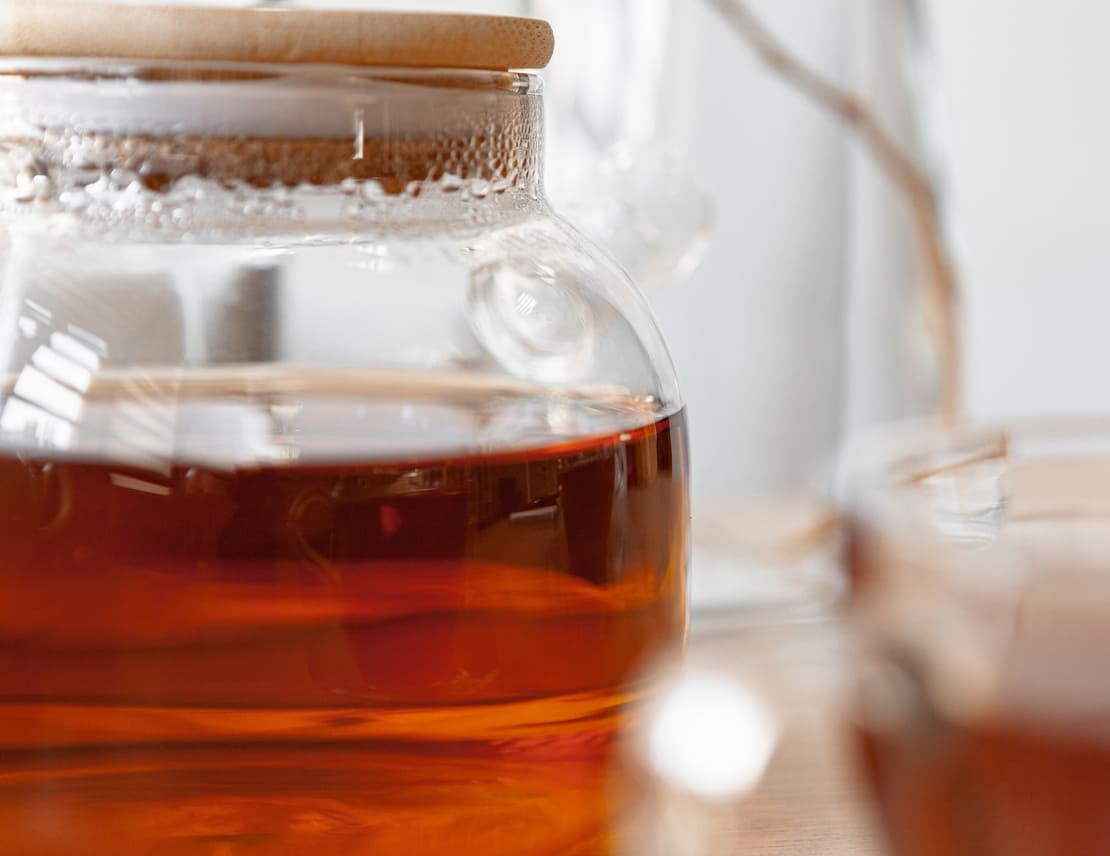
Jun tea: what it is and how to make it
Have you ever heard of Jun Tea? It is a fermented drink with ancient origins, made with green tea and honey. In this country, it is not yet as ‘well-known’ as kombucha, but it is gradually gaining popularity on the back of growing interest in non-alcoholic (or, in this specific case, slightly alcoholic) fermented drinks. If you’re curious to try it, in today’s article we’ll look at how to make it at home.
Jun tea: origins, characteristics and benefits
It’s rather difficult to pinpoint the origins of Jun Tea through historical accounts, legends and traces of its history; some claim the drink originated in China, whilst others attribute its creation to Tibetan monks, who have been using it and promoting its benefits for millennia. Jun tea is considered a refined drink, more sophisticated than kombucha – a fermented drink made from black tea to which we dedicated an in-depth feature some time ago. It is often described as ‘the champagne of fermented drinks’.
Jun tea also differs from kombucha in its slight alcohol content, which stems from the use of honey in the fermentation process; this requires a shorter fermentation time compared to that needed for kombucha.
To produce a non-alcoholic version, the fermentation time would need to be reduced further and the mixture left to rest at low temperatures to inhibit yeast activity.
The benefits of Jun Tea
This drink, rich in probiotics, prebiotics and antioxidants, has been regarded since ancient times as a genuine tonic and a useful aid to digestion and to maintaining a healthy gut microbiome.
How to make Jun Tea
To make your own Jun Tea, you will need:
Water (at least one litre)
Raw honey (2 generous tablespoons)
Green tea (7–8 grams of loose leaves)
The active culture for your Jun Tea (the SCOBY, the symbiotic colony of bacteria also used in making kombucha; you can easily buy this from shops specialising in fermented products)
Method
Before you begin, you’ll first need to find a glass jar large enough to allow your Jun Tea to ferment.
Once you’ve found the right jar, start by bringing the water to the boil. Once it has reached the right temperature, remove the pan from the heat, add the tea leaves, cover with a lid and leave to infuse for 2–3 minutes (no longer, otherwise the tea will be excessively bitter). Allow the infusion to cool to room temperature, add the honey and stir thoroughly until it has dissolved.At this point, add your culture/SCOBY to the jar, strain the tea and honey mixture and pour it into the jar.
From this moment, the first fermentation phase begins; some recommend leaving the mixture to ferment for at least 3–5 days, but the ideal time is one week.
Please note: the jar used for fermentation must not be sealed airtight. Use a clean, breathable cloth – preferably made of natural fabric – to allow the mixture to breathe. Store the container in a cool, dry place.
We have specified ‘first fermentation’ because, usually, those who prefer a stronger, more tangy flavour use a second fermentation cycle to achieve the desired result.
The SCOBY used can be kept, but for this we recommend asking for detailed instructions from the specialist shop where you purchase it.
Once ready, jun tea can be kept in the fridge for up to two weeks (or up to three months, in the case of double-fermented varieties, provided they are stored in sealed bottles)