
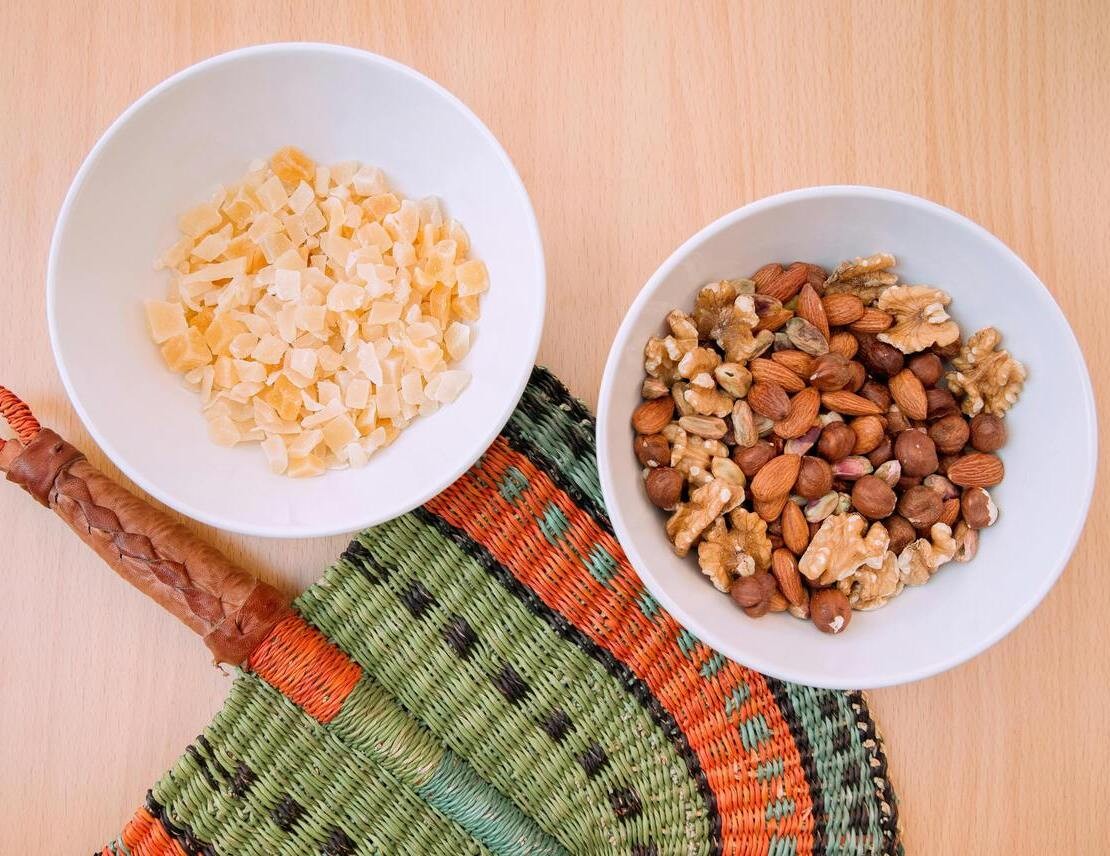
Dried fruit: today we answer the most frequently asked
Doubts, clichés, false myths: today we will take stock of the situation, trying to answer the questions we have read or heard most frequently about dried fruit and challenging some statements that are not entirely correct.
Let's start with the most trivial question: what exactly is meant by dried fruit?
From a certain point of view, we could consider it an “umbrella term”, given that this label usually refers to all nuts, dehydrated fruit and oily fruit.
Within this large group, we could make a further distinction between what is known as carbohydrate dried fruit and lipid dried fruit.
The first group includes all naturally dehydrated fruits that are low in fat but rich in natural sugars (note: we are not talking about added sugars but those naturally present in individual fruits in varying amounts). The lipid fruit group includes all nuts rich in good fats.
What is the difference between dried fruit and oily fruit?
This question is partly related to the previous answer and to the intake of good fats (such as omega 3-6). Oily fruits also include oilseeds such as sesame seeds.
Can dried fruit be eaten every day?
This question is partly linked to the previous answer and to the intake of good fats (such as omega 3-6). Oily fruits also include oilseeds such as sesame seeds.
Can dried fruit be eaten every day?
The answer is yes. In the absence of contraindications related to the specific health status of individuals, dried fruit can be included in the daily diet, provided that the recommended daily intake of 30-40 g is not exceeded.
Do dried fruits make you fat?
This is probably one of the most misleading beliefs, not only with regard to dried fruits but to any food. It is an idea that often underlies improvised, unbalanced diets, frequently the result of DIY efforts.
Whether it's dried fruit, pizza, pasta or biscuits... there are no foods that make you fat (or thin), weight gain (in the absence of particular health conditions) is linked to calorie surplus.
Dried fruit, consumed as part of a balanced diet, cannot make you fat.
Is dried fruit bad for the liver?
Like any other food, if consumed in excessive amounts it can cause problems. The key is always balance and moderation.
Is dried fruit good for the gut?
Being rich in fibre, it can help maintain intestinal balance, but be careful if you suffer from irritable bowel syndrome, as it may not be suitable for you.
Who should avoid dried fruit?
Dried fruit may not be recommended for people with specific digestive disorders. It is always best to follow your doctor's instructions and advice.
At what age can dried fruit be introduced into the diet?
At present, there is no unanimous recommendation. Some paediatricians advise introducing it during weaning (obviously not whole), while others advise waiting. For this question too, it is advisable to consult your paediatrician and avoid taking any initiative.