
Notice to customers: due to the high volume of orders and increased workload for couriers, deliveries may take a few days longer than usual. We apologise for any inconvenience.
Reference: 0446
 No reward points for this product.
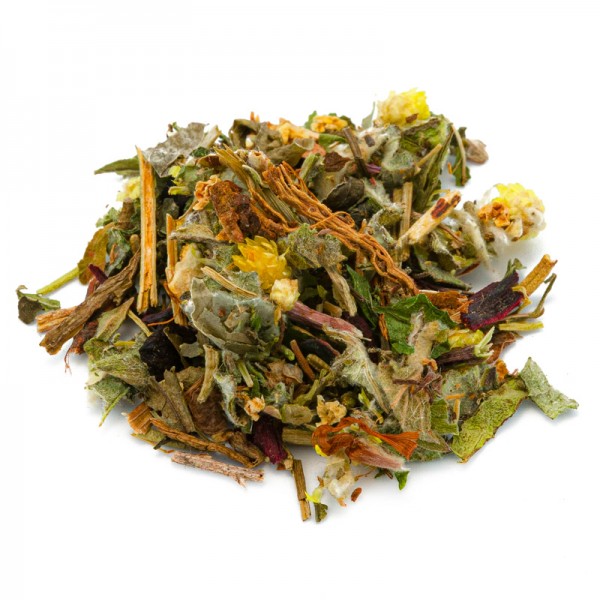
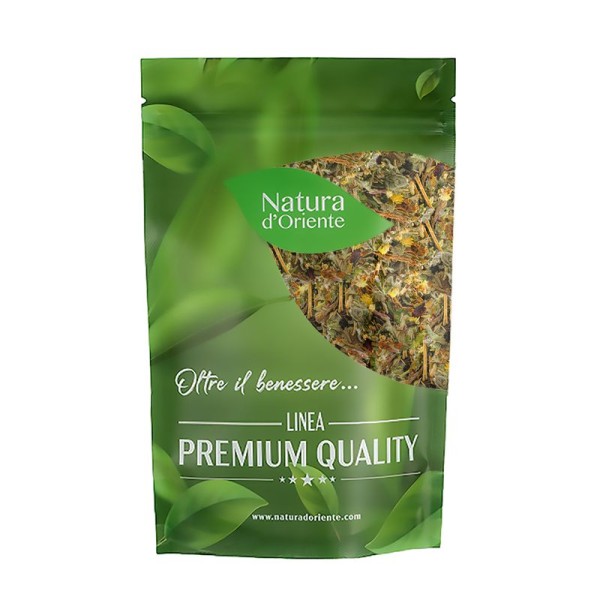
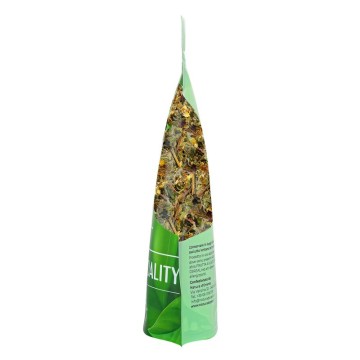
This blend brings together selected herbs traditionally used in infusions related to well-being after meals. Ingredients such as artichoke, dandelion, mint and helichrysum are known in the herbal tradition for their use in aromatic and light herbal teas. A fragrant and pleasant to taste blend, designed for a daily moment of balance and harmony.
artichoke, elderberry flowers, raponth, agrimony, rosemary, licorice, orange peel, dandelion leaves, mint, fumitory, woodruff, hibiscus, helichrysum.
This herbal tea, with its bold and aromatic flavor, combines the herbaceous and slightly bitter taste of artichoke, dandelion, and fumitory, tempered by the balsamic notes of rosemary and mint and the sweetness of licorice. The herbal blend also reveals its complexity through the floral nuances of elderberry and agrimony. As a perfect finale, the citrusy and fresh notes of orange peel and hibiscus evoke the refined qualities of this infusion. Perfect for those seeking an intensely natural wellness break, especially after meals.
The herbal tea's components are varied, derived from well-known medicinal plants or shrubs historically used in herbal medicine. Although some medicinal herbs may originate from different regions, today the herbal tea ingredients are available dried and ready for infusion. The artichoke comes from Cynara scolymus, a perennial plant in the Compositae family. Native to the Mediterranean, it has gray-green rosette leaves and a height of about one meter. The fleshy stem develops from the center of the artichoke rosette, with oval, sometimes spiny leaves. The dandelion, or common dandelion, has the botanical name Taraxacum officinale. It belongs to the Asteraceae family and is a perennial plant that grows wild in a variety of soils and climates. Woodruff (Galium odoratum) is a herbaceous perennial in the Rubiaceae family. It typically grows in the undergrowth and reaches up to 30 cm in height. Its dark green leaves form a 6- to 8-pointed star, and white flowers appear from April to June. Its characteristic aroma is released when dried. The hibiscus flower plant and Hibiscus sabdariffa belong to the mallow family (Malvaceae). Native to warm and tropical regions, it does not reach considerable size in mild climates. Its flowers are known for their beauty and intense color. European elderberry (Sambucus nigra) belongs to the Sambucus genus in the Adoxaceae family. It is a shrub that grows in humid places and prefers sunny locations. Trees reach a height of up to 15 meters and can live for about 60 years. The cream-colored flowers produce a black-purple berry with a tart flavor. Rheum rhaponticum is a herbaceous species belonging to the Polygonaceae family. It is a perennial plant, whose name derives from the Latin rapòntico, a combination of rha, rhubarb, and Pontus (meaning Black Sea). Native to Central Asia, between the Caucasus and the Urals, rhaponticum is characterized by a yellow rhizome with deep roots, from which a rosette of large, oval leaves develops. The stem can reach 2 meters and produces small, white flowers. Agrimony (Agrimonia eupatoria) is a perennial herbaceous plant in the Rosaceae family. It has a rhizome from which the stem emerges, whitish and green leaves, and yellow flowers. It grows throughout Europe, North America, and Southeast Asia. The rosemary plant, Salvia rosmarinus (or Rosmarinus officinalis), is a shrub in the Lamiaceae family. This plant is known for its leaves used in cooking and for infusions; it blooms from autumn to spring, producing aromatic linear leaves that are green on top and whitish underneath. Licorice, Glycyrrhiza glabra, is a perennial plant native to southwest Asia and the Mediterranean region. It is known for its roots, which produce a sweet compound suitable for baking, glycyrrhizin. Its name derives from the Greek for "sweet root." It grows best in deep, fertile, and moist soil. The plant, Fumaria officinalis, belongs to the Papaveraceae family. It grows wild in various climates, up to 50 cm tall, in the Mediterranean region and northern Europe. It is known for the acidic odor it releases when uprooted (hence its name). It has thin leaves and pinkish-purple flowers. The perennial helichrysum plant is Helichrysum italicum, of the Asteraceae (Compositae) family. It occurs in many varieties, forming a wild shrub. It grows to about 50 centimeters tall, prefers dry soil, and is very common in Italy, as well as growing in the Mediterranean regions of France and Yugoslavia. Mint (Mentha) is a perennial herb of the Lamiaceae family, famous for its aroma. It has a woody rhizome and oval, serrated leaves. Different mint species have similar properties, thanks to the presence of the active ingredient menthol.
The correct infusion is obtained by placing about 3-5 grams of the herbal blend in a cup (250 ml) of water at 100°C. Let it steep for 8 to 10 minutes before drinking the herbal tea. Add honey or sugar, if desired.
The ingredients that make up the blend are selectedAlthough herbal teas are known for their quality, it is essential to consume them within the recommended doses. If consumed in excess, the herbal tea may cause possible gastrointestinal side effects. Furthermore, it is important to check the individual ingredients for possible allergies or food intolerances. The herbal tea is not recommended for pregnant or breastfeeding women.
Specific References
This blend brings together selected herbs traditionally used in infusions related to well-being after meals. Ingredients such as artichoke, dandelion, mint and helichrysum are known in the herbal tradition for their use in aromatic and light herbal teas. A fragrant and pleasant to taste blend, designed for a daily moment of balance and harmony.
artichoke, elderberry flowers, raponth, agrimony, rosemary, licorice, orange peel, dandelion leaves, mint, fumitory, woodruff, hibiscus, helichrysum.
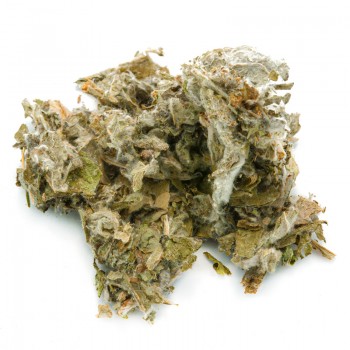
Artichoke leaves are known to be an excellent remedy for the liver and digestion, despite the bitter taste. They have the power to deflate the stomach and hips, help shape the body through their diuretic action. Artichoke is traditionally used to combat dyspepsia or poor digestion, to treat liver disorders, and for the benefits it can bring thanks to vitamins and antioxidants.
Ingredients: artichoke leaves
Botanical name: Cynara scolymos
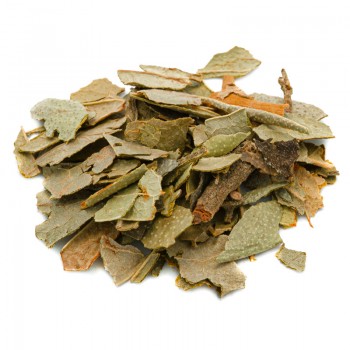
Boldo leaves act as a liver protector and detoxifier, helping to prevent damage to the liver and gallbladder. They are also useful for counteracting poor digestion and intestinal irritation, and have a mild laxative and calming function.
Ingredients: boldo from Chile
Nome botanico: Peumus Boldus Molina
Origin: Chile
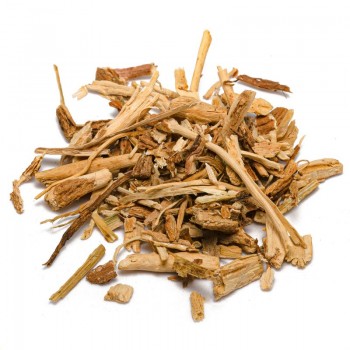
The chicory root is used for beneficial herbal teas to purify the liver, favoring the diuretic and detox activity on the body. The herbal tea cut root is used for laxative use, having a good ability to improve digestion and counteract constipation. Furthermore, chicory is studied for its properties as a regulator of the amount of cholesterol and sugar in the body.
Ingredients: chicory root
Botanical name: Cichorium Intybus L.
Origin: Albania
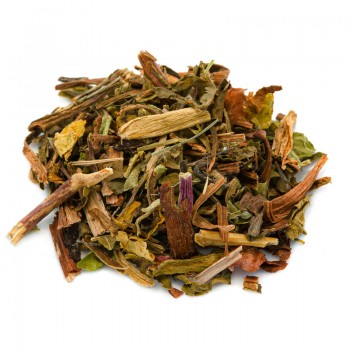
The dandelion leaves cleanses the liver, stimulates the liver and kidney functions, excellent detoxifier, helps eliminate cholesterol, diuretic, provides relief in case of rheumatism. Excellent hot drink.
Ingredienti: Tarassaco
Nome botanico: Taraxacum Officinale (L.)
Origine: Europe Oriental
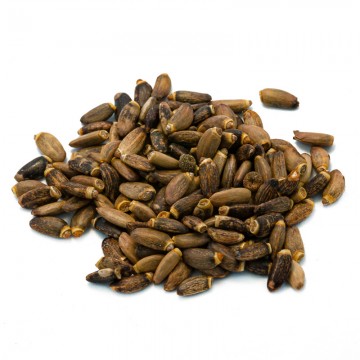
Milk thistle is a plant known in the herbal medicine tradition, indicated for liver and gallbladder disorders, with protective and purifying actions. It also contains various antioxidants, useful for the well-being of the kidneys and intestines, acting in a beneficial way for proper digestion, detoxification of the body and stimulation of diuresis.
Ingredients: milk thistle seeds
Botanical name: Silybum Marianum (L.) Gaertn
Origin: Poland
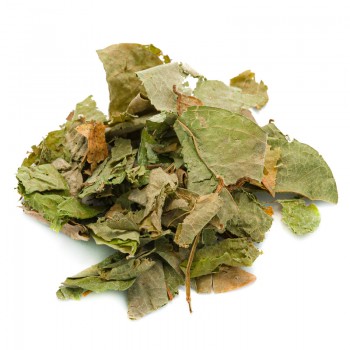
Desmodium leaves is a very useful remedy to restore the correct functionality of liver cells, helping it to regenerate faster. Another common use of this exotic plant is linked to its antioxidant properties, and to the antispasmodic action on the respiratory system. A benefit that can be useful to soothe the symptoms of asthmatic allergies, reduce the constriction of the airways and bronchi.
Ingredients: desmodium leaves
Nome botanico: Desmodium Adscendens DC.
Origin: Ivory Coast