- New
Reference: 1475
 No reward points for this product.
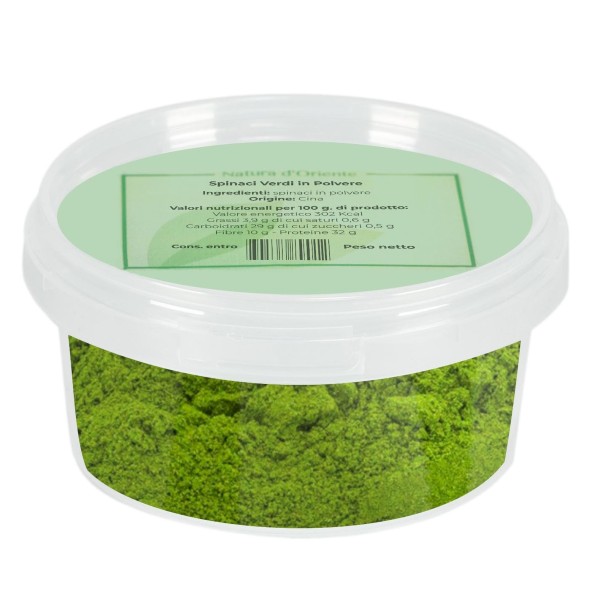
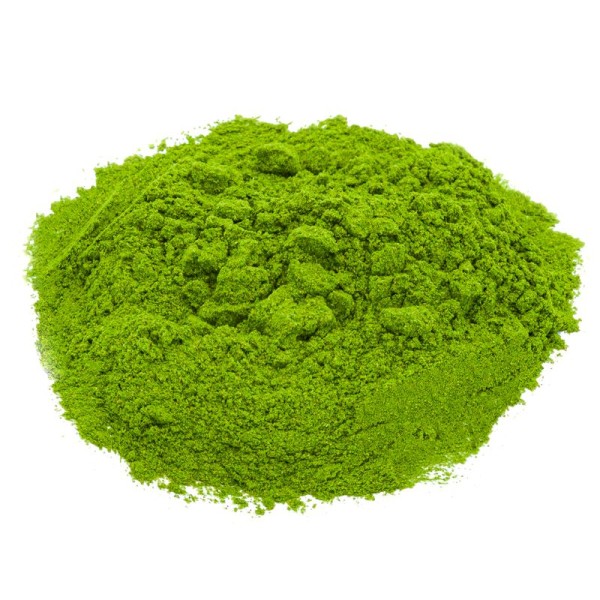
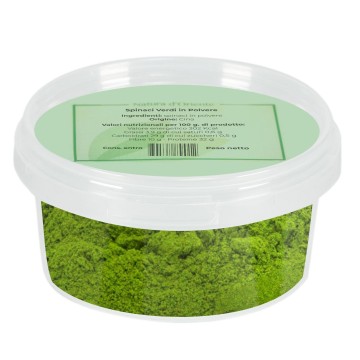
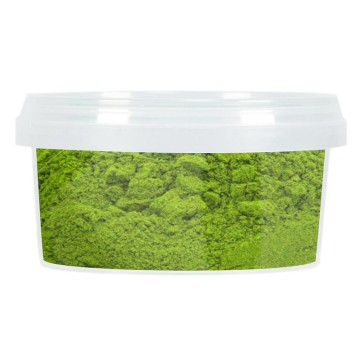
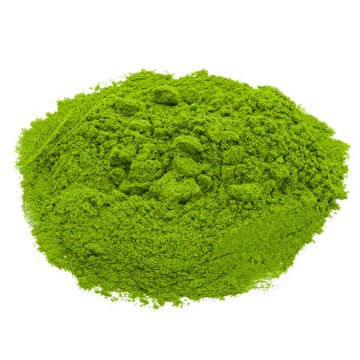
Green spinach powder is a product obtained by dehydrating and grinding fresh spinach leaves. Rich in nutrients, it is a versatile ingredient ideal for enriching smoothies, soups, sauces and baked goods. Green Spinach Powder retains all the flavor and benefits of fresh spinach, offering a convenient way to incorporate greens into your daily diet.
spinach
They are made from fresh spinach, dried to a finely chopped powder, making them easy to use in recipes. This version is ideal for adding the nutritious properties of spinach to various recipes, preserving the vegetable's nutritional integrity in a concentrated form. The powdering process removes moisture, resulting in a food with a significant protein and fiber content. Perfect for adding to recipes for pasta dishes, baked goods, or beverages (juices, smoothies, etc.), spinach powder enhances their nutritional value.
This preparation is increasingly popular among health-conscious people, as it is packed with nutrients such as beta-carotene, iron, protein, and fiber. These are elements abundant in spinach powder, associated with numerous health benefits. Beta-carotene is known to protect against age-related macular degeneration, while fiber helps prevent constipation and promote weight loss. Furthermore, adding spinach powder to your diet is an alternative that can help lower blood pressure and control blood sugar.
The nutritional benefits of spinach powder are best known for their beta-carotene content, which does not degrade during drying. Rich in carotenoids that protect eye health, this powder adds a vital nutrient that has several beneficial functions for vision. Spinach powder is also rich in iron, as compared to other vegetables, spinach contains good amounts of this important mineral. The iron in the powder is highly concentrated, making it an excellent natural source of plant-based iron. This is non-heme iron, which is absorbed less well than the heme iron found in meat. For this reason, it's recommended to increase the body's ability to absorb non-heme iron by combining spinach powder with foods rich in vitamin C (such as bell peppers, oranges, bell peppers, and kiwi). Vitamin C improves the bioavailability of iron, and this powder can be very useful as part of a vegetarian or vegan diet. Spinach is also an excellent source of fiber, which is retained despite dehydration due to its powdering. Spinach powder, rich in dietary fiber, aids intestinal transit and prevents constipation and bloating. High-fiber diets can also aid weight loss and combat high blood pressure. Furthermore, spinach powder provides a high protein content, making it a natural source of protein. The concentration of these elements, resulting from the powdering of the leaves, is ideal for achieving the required percentage of protein and other nutrients in the diet. Furthermore, it displays good antioxidant activity thanks to its phenol content. The highly soluble version of spinach is easy to mix into drinks and various culinary preparations, and a small amount is enough to reap its nutritional benefits.
The spinach plant is grown for its leaves, which have been used as a vegetable for centuries. It likely originated in ancient Persia (now Iran), from where it spread to India and then China.
The Chinese, in fact, called spinach "Persian vegetable," and the first written mention of it dates back to them, dating its arrival in Nepal around 650 AD.
Subsequently, the Arabs brought spinach to Sicily in 827, and from then on it spread throughout the Mediterranean. It is mentioned in a 10th-century text by a physician (Rhazes), and in agricultural texts useful for its planting and harvesting. It became very popular at the table and considered among the most delicious vegetables. In the 13th century, spinach also reached Germany, where the spiny-seeded variety spread, while other varieties appeared in the 16th century. During these centuries, spinach arrived in England and France from Spain and was immediately adopted. Even in northern climates, it grew in spring, when there were no other vegetables, and could be an excellent food for the Lenten period. It enjoyed a moment of fame thanks to Catherine de' Medici, who spread Italian cuisine to France in the mid-16th century. Its Tuscan origins led to spinach-based cuisine becoming known as "Florentine."
Over time, the beneficial properties of spinach were understood, especially its iron content, and during the First World War, spinach juice was recommended to French soldiers suffering from hemorrhages. Today, we find both ancient and more modern varieties, which grow faster and have broader leaves.
Three varietiesModern spinach varieties include Savoy, with dark green, curly leaves; Semi-Savoy, with slightly curly leaves and easy to clean; and Flat, with smooth leaves, even easier to prepare.
Spinach comes from Spinacia oleracea, a herbaceous plant in the Amaranthaceae family.
It can reach about 30 cm in height and is an annual, surviving only one growing season. It produces edible leaves that grow from the center of the plant; they measure up to about 30 cm in length and 15 cm in width.
The spinach plant produces small yellow-green flowers, which produce small clusters of fruit, which contain seeds. It is propagated by these seeds, usually planted in early spring for a summer harvest. Spinach with spiny seeds is sown in autumn for a winter and spring harvest.
It grows well in cool areas and can survive the first frosts of temperate climates. The ideal temperature is between 40 and 60°F (4 and 16°C). Spinach grows best in well-drained clay soil and is sensitive to acidic soil.
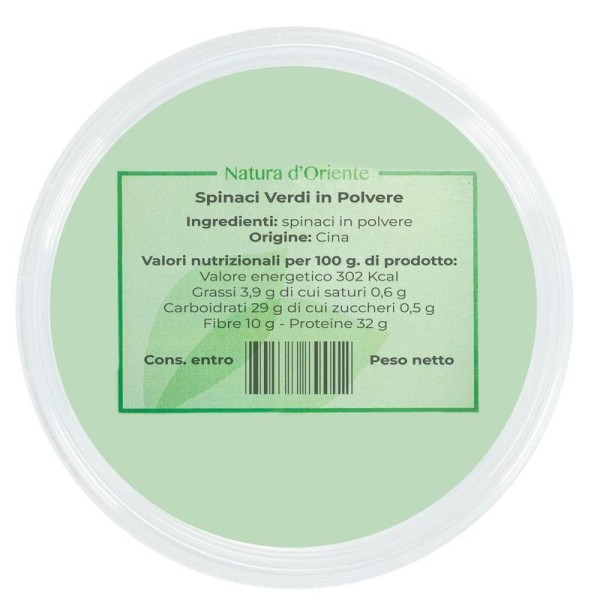
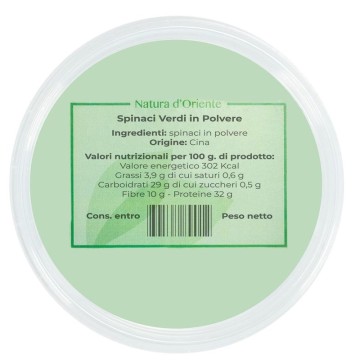
The powder contains the fiber, vitamins, minerals, and phytonutrients found in fresh spinach. It offers good amounts of protein (about 30%), fiber (about 24%), along with a healthy content of phenols, vitamin A (about 13,000 µg), and vitamin C (about 300 mg). The powder contains minerals such as potassium (about 3000 mg/100 g), calcium (about 2000 mg/100 g), and magnesium (about 1400 mg/100 g). Other important elements include iron (about 25 mg/100 g), zinc, manganese, and copper; the powder also contains carbohydrates and sodium.
Besides being a healthy addition to the diet, spinach powder also offers flavorful benefits in cooking.
Like other dried vegetables, the powder has a longer shelf life than fresh vegetables and does not need to be refrigerated. It doesn't take up much space in the pantry, but it's a versatile ingredient.
Spinach powder can be incorporated into drinks and liquids, for example, adding it to smoothies and juicers for an extra boost of nutrients.
Spinach powder can be mixed into sauces and dressings for pasta dishes and salads. It can add color and flavor to dishes like omelettes and scrambled eggs, as well as to bread dough and other baked goods.
Soup lovers can add spinach powder at the end of cooking, or to the broth of soup. To incorporate spinach into your daily diet, you can also use the powder to make cookies and muffins, and sprinkle it on ice cream (for unusual combinations!).
Despite the benefits of spinach, it's important to know that excess dietary fiber can lead to excessive laxative effects and diarrhea, abdominal cramps, and intestinal bloating.
Furthermore, spinach contains oxalate, an organic acid that, in excessive amounts, is difficult for the kidneys to filter and excrete. Oxalate can bind with minerals such as zinc, calcium, and magnesium, so those with kidney disease and kidney stones should avoid excessive spinach intake. Some people with spinach allergies may experience reactions such as hives, itching or redness, red eyes, headaches, etc. An effective dose of spinach extract is no more than 4-5 grams per meal. Moderate doses are recommended during pregnancy and breastfeeding.
Data sheet
Green spinach powder is a product obtained by dehydrating and grinding fresh spinach leaves. Rich in nutrients, it is a versatile ingredient ideal for enriching smoothies, soups, sauces and baked goods. Green Spinach Powder retains all the flavor and benefits of fresh spinach, offering a convenient way to incorporate greens into your daily diet.
spinach
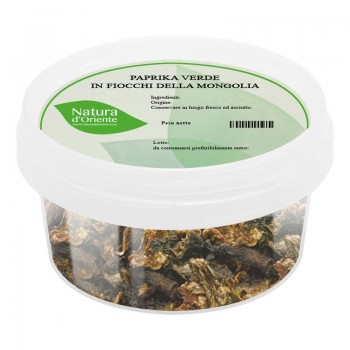
Green paprika flakes lend themselves very well to the preparation of various recipes. Green paprika flakes is the only spice that must be used in considerable quantities, otherwise there is a risk that it will not make any contribution to the dish. It is particularly suitable for raw salads, or it can be cooked in various first courses.
green paprika flakes
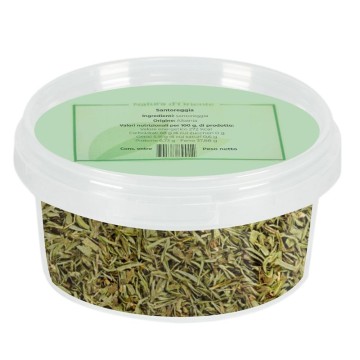
Savory, like many other aromatic herbs, is attributed a herbal use, in particular linked to the digestive system. This medicinal plant is said to have antispasmodic and stomachic properties. Very widespread in Italy, in the kitchen it is excellent for flavoring food but is also rich in beneficial properties, it is antibacterial, anti-inflammatory, antioxidant.
savory
Smoked sweet paprika lends itself very well to the preparation of various recipes. If we love the sweet, rich, fragrant, greedy taste, this is the indicated spice. It is a condiment widely used in Spanish cuisine, both with fish and with all types of soups and is an essential ingredient in most Spanish cured meats.
smoked sweet paprika
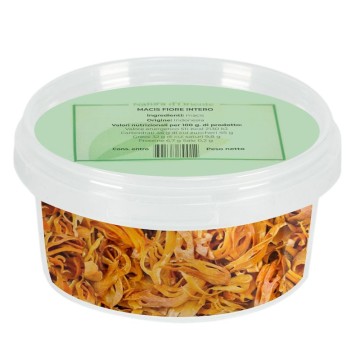
Ground mace has a more delicate flavor than nutmeg and has various uses in the kitchen. In Indian cuisine, it becomes part of the mix of spices that make up the curry, and in Chinese cuisine, where it is used in both savory and sweet dishes.
whole mace
The Carolina Reaper chili cream is perfect for giving an intense and pungent flavor to your recipes. It takes its high spiciness from the new hybrid of the Capsicum Chinense family, which grows in South Carolina and is obtained from the cross between two species of extremely spicy chili peppers, the Pakistani Naga Morich and a Red Habanero. A must-try for those who love a "hot" touch on meat, fish, vegetables and many other dishes.
99% carolina reaper chili pepper, citric acid, extra virgin olive oil.
Cloves have a very particular scent, penetrating and warm, and give dishes a pungent taste with a sweet and balsamic aftertaste. The intense aroma attenuates with cooking, dominates over other spices but harmonizes the flavor in many sweet and savory dishes. Whole cloves make roasts, broths and stews more aromatic. They facilitate good digestion, perfume the breath and give balsamic virtues to infusions.
cloves
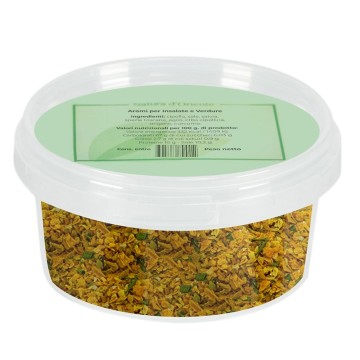
A selected blend of aromas, with a savory taste and perfect to accompany vegetable side dishes, greens and salad dishes. Also excellent on caprese, omelette or boiled egg. We offer a simple and much appreciated condiment, based on aromatic herbs and spices that add lively flavour.
onion, salt, sage, Tuscan spices, garlic, chives, oregano, turmeric.
Thanks to its intense taste, ground rosemary is suitable to accompany fish, meat and many vegetables. It cannot be missing with roasted potatoes and is often used to brush meat and grilled fish with oil. It has a delicate aroma and can also be used in cooking.
Rosemary
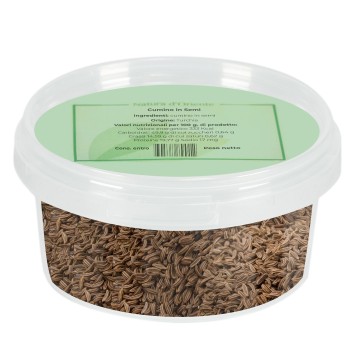
The cumin plant is one of the oldest medicinal plants, it produces seeds that have a spicy flavor and a rich and singular aroma. In recent years, some research is also verifying its slimming power. The scientists involved compared the effects on overweight and blood sugar levels of the use of cumin extracts.
cumin seeds
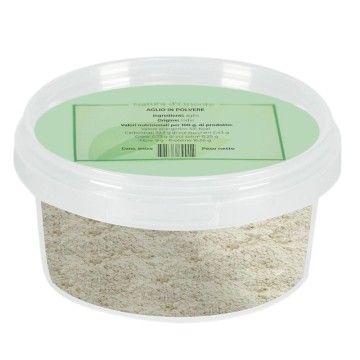
Garlic powder is a practical form in the kitchen, to flavor recipes in a meticulous as well as tasty way. You can prepare many recipes with this irreplaceable seasoning, used for centuries for its flavor and healthy qualities. The powdered version is perfect for seasoning fish dishes, white meat such as chicken or turkey, and to make its flavor on roasts, stuffings and barbecue rubs.
Garlic
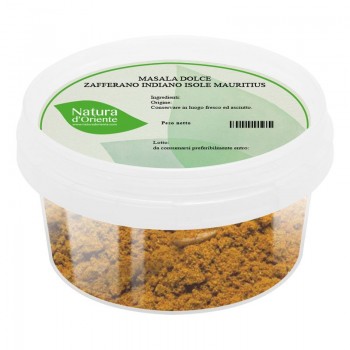
Similar to Indian curry but more delicate, Sweet Masala is a unique mix that brings together the flavors of licorice, mustard, coriander, cumin and other aromatic and intense spices. Perfect for flavoring fish, vegetables and white meats, it is called Indian saffron for its ability to create deisi flavors, with an aftertaste rich in sweetish nuances. Try it with different creative recipes!
Ingredients: turmeric, licorice sticks, mustard, coriander, salt, fenugreek, basil, cumin, celery, chillies, garlic.
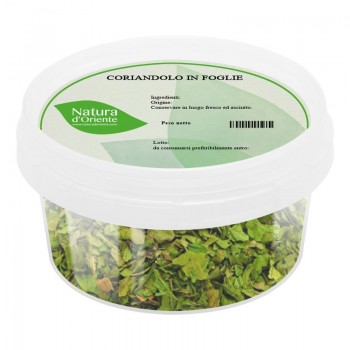
This herbaceous plant has several healthy properties, as well as gastronomic, known for centuries. Even today, its leaves are used both to flavor dishes with an intense taste, and to create herbal teas useful against stomach pain, aerophagia, as a function of digestive aid and astringent.
coriander leaves
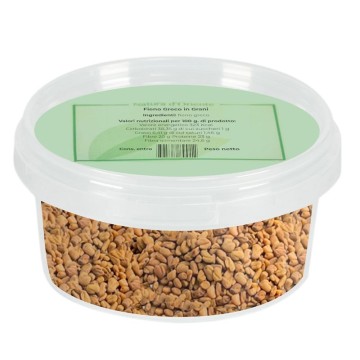
Fenugreek grains have strong properties that make them a tasty and beneficial spice. They are used in cooking for many recipes, for a soothing action on the digestive system and to stimulate the metabolism of carbohydrates and triglycerides.
fenugreek
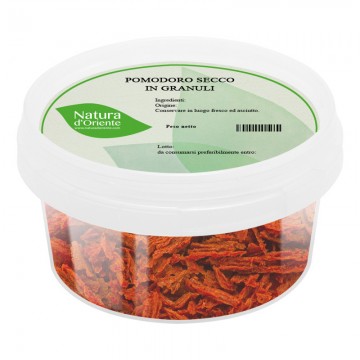
A version of the tomato in granules, rich in taste and ready to be used in many recipes. Dehydrated tomatoes can be used in the preparation of soups and stews, vegetable dressings, baked goods and many other dishes. They are a great ingredient in mouthwatering barbecue or pasta sauces. The tomato in granules is a dehydrated product, to be rehydrated before use.
salt, oregano, chilli, tomato, carrot, onion.
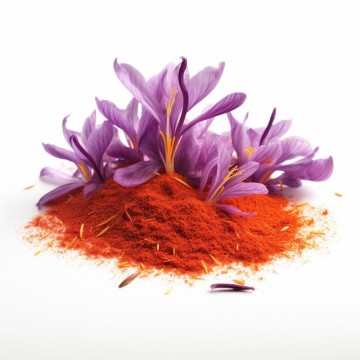
Saffron is a spice widely used in oriental cuisine in the preparation of meat, fish and rice dishes; also popular for flavoring desserts and drinks. The intense and persistent aroma of saffron, and the bitter taste that characterizes it, make it a prized spice, among the most precious and expensive in the world. In Italy, the use of saffron on risotto alla milanese is well known.
Negin saffron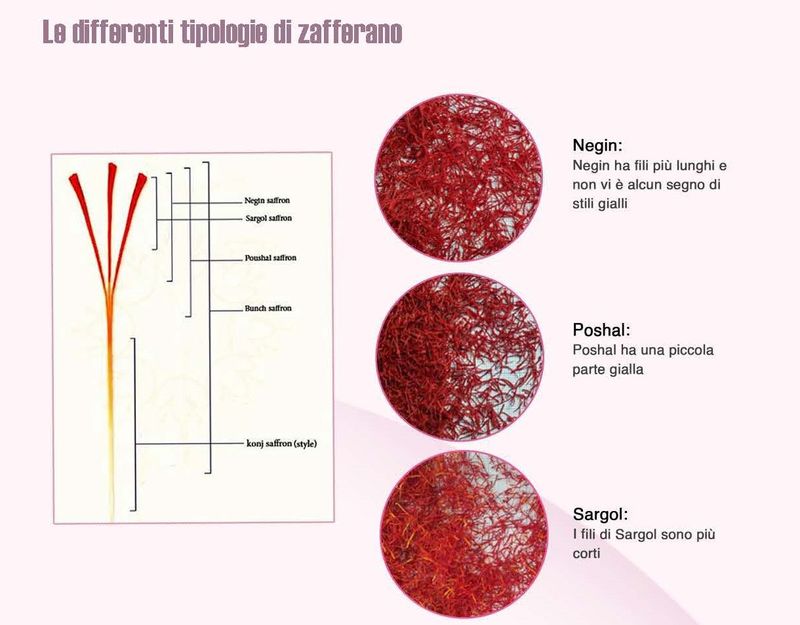
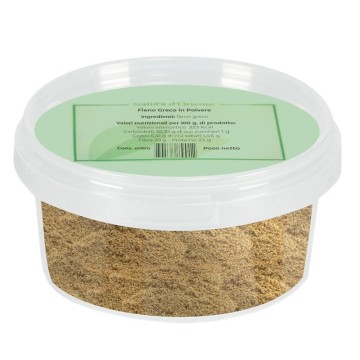
Ground fenugreek is a tasty spice with many beneficial properties. Used in cooking for many recipes, with its pungent and slightly bitter taste, it enriches spicy mixtures, first and second courses. It has an emollient action on the digestive system, and positively stimulates the metabolism of carbohydrates and triglycerides.
fenugreek